In brief: Ukrainians have been coming to Canada since 1891, across five distinct waves driven by agricultural opportunity, political upheaval, economic transition and armed conflict. Today, approximately 1.354 million people in Canada confirm their Ukrainian origin. The community accounts for about 4% of the population, making it the seventh largest national minority. From early prairie farmers to modern professionals, Ukrainians have built a deeply rooted, influential and culturally vibrant community.
How Many Ukrainians Are There in Canada?
Today, Ukrainians account for approximately 4% of the population of Canada and occupy the seventh place among the country's national minorities. In March 2020, the Ambassador of Ukraine in Canada, Andriy Shevchenko, reported that 1.354 million people confirmed their Ukrainian origin. Of these, about 350,000 have both Ukrainian parents and more than 950,000 have one Ukrainian parent.
The ambassador also noted a significant trend: under the "new wave" of migration to Canada from Ukraine, many arrivals are people with high education and strong professional training. While this represents a brain drain for Ukraine, it has enriched Canadian society with skilled professionals in fields ranging from medicine and engineering to information technology and the arts.
The geography of Ukrainian settlement in Canada is broad but follows historical patterns. Most Ukrainians are concentrated in the eastern and central parts of the country: Ontario, Alberta, Manitoba and Saskatchewan. Major urban centers include Toronto, Edmonton, Lethbridge, Winnipeg, Calgary and Montreal. For a closer look at the diaspora's internal dynamics, see our article on the Ukrainian diaspora in Canada.
The Five Waves of Ukrainian Immigration
It is customary to distinguish five waves of Ukrainian emigration to Canada, each driven by different circumstances and producing different types of immigrants.
| Wave | Period | Main Driver | Typical Immigrants |
|---|---|---|---|
| First Wave | 1891-1914 | Austro-Hungarian oppression, land scarcity | Peasant farmers, whole families and villages |
| Second Wave | 1918-1939 | Post-WWI urbanization | Workers moving to industrial centers |
| Third Wave | 1945-1955 | Political refugees from Soviet rule | Intellectuals, professionals, political activists |
| Fourth Wave | 1990s | Post-Soviet economic crisis | Economic migrants seeking stability |
| Fifth Wave | 2013-present | Conflict in Ukraine, 2022 invasion | War refugees, skilled professionals, families |
The first wave began when Ukrainians wanted to escape the enormous fees imposed by the Austro-Hungarian government. Canada offered abundant free land, virtually no taxes, and complete cultural autonomy. Nobody forced immigrants to speak English or practice any particular religion. So Ukrainians settled in remote wilderness areas together with their families, forming small communities. The first Ukrainian settlers were Ivan Pylypiv and Vasyl Yeleniak, both from the village of Nebylov. Pylypiv founded the settlement of Edna-Star in Alberta, the first and largest group settlement of Ukrainians in Canada.
The second wave coincided with the end of World War I. People began shifting from farming to urban life, moving en masse to industrial centers, mainly Toronto and Montreal. These cities still have the largest concentrations of Ukrainians today.
The third wave was driven by political motives and began at the end of World War II. These were mostly repatriates from British, American and French occupation zones in Europe. They included intellectuals, artists and political activists who significantly strengthened the diaspora's cultural and organizational capacity.
The fourth wave, known as the "zarobitchany" wave, began in the 1990s. Its main driver was the economic difficulties of the transitional period in newly independent Ukraine.
The fifth wave began after the events in Ukraine in 2013-2014 and accelerated dramatically after the full-scale invasion in 2022, bringing hundreds of thousands of new arrivals to Canada.
The Dark Times: Internment During World War I
It is not customary to remember this, but the fate of Ukrainian immigrants in Canada was not always rosy. After Britain entered World War I, nearly 10,000 Ukrainians were interned and placed in camps across the country. Most of these Ukrainians had come from Bukovina and Galicia, territories then controlled by Austria-Hungary. They had entered Canada on Austro-Hungarian passports, and with the outbreak of war, they were classified as "enemy aliens."
The absurdity of the situation was profound: Ukrainians who had fled the Austro-Hungarian Empire could not possibly have warm feelings toward it, yet they were treated as potential threats to Canadian security. The consequences were devastating:
- Ukrainians were deprived of their property and possessions
- They were sent to camps and forced into industrial and mining labor at wages far below market rates
- Prisoners were denied the right to read newspapers
- All correspondence was strictly censored
- Physical labor was grueling, with food rations often inadequate for basic physiological needs
- Living conditions in the harsh climate led to illness, suicide and deaths from attempted escapes
According to Canadian historians, a total of 24 camps operated across the country. Even children who had been caught with their parents behind barbed wire suffered and died. It was not until February 1920 that the interned Ukrainians were finally released. The Canadian government later issued a formal apology for this dark chapter in its history.
Post-War Immigration and Community Growth
After World War II, Canada welcomed a second major wave of Ukrainian immigrants, many of whom were refugees fleeing Soviet rule. This group was markedly different from the early agricultural settlers. It included intellectuals, professionals, artists and political activists who brought organizational expertise and cultural sophistication to the community.
They contributed significantly to Canadian academia, media and cultural life. Ukrainian organizations became more structured, professional and politically active, strengthening the community's voice nationwide. During the Cold War, Ukrainian Canadians became active advocates for Ukrainian independence, human rights and democratic values, operating firmly within Canada's legal and political framework.
This period also saw the establishment of many of the institutions that continue to serve the community today: cultural centers, heritage museums, language schools and professional associations. The organizational infrastructure built during the post-war decades gave the Ukrainian diaspora a level of institutional capacity that few other immigrant communities could match.

Multiculturalism and Integration
Canada's official adoption of multiculturalism in 1971 marked a turning point for the Ukrainian diaspora and for Canadian society as a whole. Ukrainian Canadians were encouraged to maintain their cultural identity while fully participating in Canadian civic life.
As a result, Ukrainian language programs expanded across the country. Cultural festivals gained national recognition and government funding. Ukrainian Canadians entered politics at all levels, from municipal councils to the federal cabinet. The community gained institutional support and legal recognition that embedded it firmly within the Canadian system.
This approach allowed Ukrainians in Canada to integrate without losing their heritage. The result was a community that demonstrated how diaspora identity and national belonging could coexist productively. Ukrainian immigrants, in fact, became some of the strongest advocates for the multiculturalist model, pushing Canada further along the path that would make it one of the most culturally diverse nations on earth.
Why Canada Attracts Ukrainians
Several factors make Canada particularly attractive to Ukrainian immigrants, beyond the historical connections and established community:
- Strong diaspora support networks: No matter what city you move to, you will find compatriots willing to help you adapt and solve both everyday and more serious problems
- Financial assistance: Community members help each other secure mortgages on more favorable terms and share practical knowledge about the housing market
- Cultural preservation rights: All diasporas in Canada have the legal right to preserve their cultural values and pass on heritage and traditions to descendants
- Special immigration programs: Canada maintains programs that facilitate Ukrainian immigration, including study visas that lead to work permits and citizenship
- Economic opportunities: A strong economy with demand for skilled labor across multiple sectors
The ambassador's observation is telling: under the new wave of migration, many arrivals are highly educated professionals who could have contributed greatly to Ukraine. But in a globalized world, it is naive to think that artificial barriers can keep talented people from seeking opportunity abroad. The challenge for Ukraine is to create conditions that motivate people to return, while the diaspora in Canada continues to grow stronger.
For more on how the diaspora's organizational structures work, explore our article on the specifics of the Ukrainian diaspora living in Canada.
Ukrainian Canadians Today
Today, an estimated 1.4 million Canadians claim Ukrainian ancestry. Ukrainian Canadians are well represented in politics, business, education, media and public service. The three Midwestern provinces of Alberta, Saskatchewan and Manitoba remain the historic center of Ukrainian culture, though Toronto, Edmonton, Winnipeg and Montreal host the largest urban communities.
The diaspora plays a larger role in Canada than the almost twice-as-large diaspora of Ukrainians in the United States. This outsized influence stems from the community's organizational discipline, its deep integration into Canadian political life, and the institutional support provided by Canada's multicultural framework.
Ethnic Ukrainians who achieved success on the Canadian political scene include figures like Edward Stelmach, who served as Premier of Alberta, and Ramon Hnatyshyn, who served as Governor General of Canada. The Ukrainian diaspora carries significant political and economic weight, far greater than its numbers alone would suggest. For a deeper understanding of Canada's immigration system, see our article on why Canada has the best immigration system in the world.
Ukrainians lead an active social life across Canada: organizing festivals, participating in parades, celebrating traditional holidays and maintaining a visible cultural presence in every major city. The Ukrainian community in Toronto, for example, sustains a vibrant network of churches, schools and cultural associations that serve as the backbone of community life for both long-established residents and newcomers. The community of Ukrainians across Canadian cities continues to grow with each wave of immigration.
Cultural Contributions to Canadian Society
Ukrainians in Canada have enriched national culture through contributions that are now widely recognized as integral to the country's multicultural identity:
- Traditional dance and music: Ukrainian folk dance ensembles and choirs perform at events from coast to coast
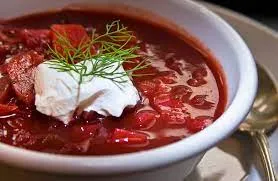
- Cuisine: Perogies, borscht, holubtsi and other Ukrainian dishes have become Canadian staples found in grocery stores and restaurants nationwide
- Literature and visual arts: Ukrainian-Canadian writers, painters and filmmakers have contributed to the national cultural landscape
- Community festivals: Annual celebrations of Ukrainian heritage attract participants from across the cultural spectrum
- Religious architecture: Ukrainian churches with their distinctive onion domes are architectural landmarks in cities and towns across Western Canada
Common Mistakes When Studying Ukrainian Immigration
- Treating all waves as identical: Each wave brought different types of immigrants with different motivations and skills
- Ignoring the internment period: The WWI camps were a formative experience that shaped the community's political consciousness
- Overlooking internal diversity: The diaspora includes people across the political spectrum, from different regions of Ukraine, with different religious affiliations
- Confusing integration with assimilation: Ukrainian Canadians maintained their identity precisely because Canada's system did not require them to abandon it
- Underestimating the fifth wave: The post-2022 arrivals are reshaping the community in ways that will take years to fully understand
The story of Ukrainians in Canada is one of perseverance, adaptation and success. From early agricultural settlers to modern professionals and leaders, Ukrainian Canadians have built a strong, respected and deeply rooted community. Their experience illustrates how immigration, when supported by inclusive policies and mutual respect, can become a powerful force for national cohesion, cultural richness and long-term stability.
Ukrainian Canadians by the Numbers: 2026 Census Data
The most recent census data provides the clearest statistical portrait yet of Ukrainians in Canada, confirming both the community's enduring strength and its ongoing transformation. Approximately 1.4 million Canadians now claim Ukrainian ancestry, whether single or multiple origin, placing them firmly among the country's largest ethnic groups. This figure represents a notable increase from earlier counts, driven in large part by the arrival of tens of thousands of newcomers under the Canada-Ukraine Authorization for Emergency Travel (CUAET) program since 2022. Understanding the demographic profile of Ukrainian Canadians is essential for grasping how deeply this community is woven into the fabric of Canadian society.
Geographic Distribution by Province and City
The geographic distribution of Ukrainians in Canada reflects more than a century of settlement patterns, starting with the prairie homesteads of the 1890s and extending to the urban concentrations of the twenty-first century. Alberta remains the province with the largest proportional Ukrainian presence, home to approximately 332,000 people of Ukrainian ancestry, representing about 9% of its total population. The earliest settlements around Edna-Star and Vegreville established Alberta as a Ukrainian heartland, and cities like Edmonton and Calgary continue to attract newcomers from Ukraine to this day.
Ontario follows closely with approximately 317,000 Ukrainian Canadians, the majority concentrated in the Greater Toronto Area. Toronto serves as the primary destination for recent arrivals, offering economic opportunity and a well-established network of Ukrainian institutions. For a detailed look at community life in Canada's largest city, see our article on Ukrainians in Toronto.
British Columbia is home to roughly 197,000 people of Ukrainian descent, with Vancouver as the main center. Manitoba counts approximately 167,000 Ukrainian Canadians, a striking figure given the province's smaller overall population; at roughly 12%, Manitoba has one of the highest proportional Ukrainian populations of any jurisdiction outside Ukraine itself. Winnipeg's North End remains one of the most historically significant Ukrainian neighborhoods in the country. Saskatchewan mirrors Manitoba's pattern with about 129,000 residents of Ukrainian origin, representing close to 12% of the provincial population.
Among the top cities for Ukrainians in Canada, Edmonton leads with the highest per-capita Ukrainian population of any major Canadian city, followed by Toronto, Winnipeg, Calgary and Vancouver. Smaller centers like Saskatoon, Thunder Bay and Sudbury also maintain active Ukrainian communities rooted in early twentieth-century settlement waves. For a broader perspective on the community's internal demographics, consult our article on how many Ukrainians live in Canada.
Language, Religion and Cultural Identity
One of the most closely watched indicators of diaspora vitality is language retention. Census data reveals a complex picture: the number of Canadians who speak Ukrainian at home has been declining steadily for decades, with fewer than 100,000 people now reporting Ukrainian as their primary home language. Among third- and fourth-generation Ukrainian Canadians, English has almost entirely replaced Ukrainian in daily life. However, this linguistic shift does not correlate with a loss of cultural identity. Surveys consistently show that a strong majority of those who claim Ukrainian ancestry also identify with Ukrainian cultural traditions, participate in community events and consider their heritage an important part of their personal identity.
The arrival of CUAET newcomers has partially reversed the language decline, at least in the short term. Recent arrivals overwhelmingly speak Ukrainian or Russian as their first language, and many continue to use Ukrainian at home. Whether this trend persists into the second generation will depend on the availability of Ukrainian-language schooling, community programming and the broader social incentives for multilingualism in Canadian society.
In terms of religious affiliation, Ukrainian Canadians are divided primarily between the Ukrainian Orthodox Church of Canada and the Ukrainian Catholic Church, with both denominations maintaining extensive parish networks across the country. A growing proportion of younger Ukrainian Canadians identify as secular or non-denominational, reflecting broader Canadian trends away from organized religion. Nevertheless, churches remain critical institutional anchors for community life, hosting language schools, cultural events and social services that extend far beyond their strictly religious functions.
Economic Profile and Educational Attainment
Economically, Ukrainian Canadians have achieved parity with, and in some measures surpassed, the broader Canadian population. The median household income among Ukrainian-origin Canadians tracks closely with the national median, and labor force participation rates are consistently above average. Ukrainians in Canada are well represented across a wide range of industries, including construction, agriculture, energy, healthcare, education and technology. In Alberta and Saskatchewan, Ukrainian Canadians have historically played a significant role in the oil and gas sector, while in Ontario and British Columbia, they are increasingly concentrated in professional services, finance and the tech industry.
Educational attainment among Ukrainian Canadians is notably high. Census data shows that the proportion of Ukrainian-origin Canadians holding a university degree exceeds the national average, a trend that has accelerated with each successive immigration wave. The third wave, composed largely of post-war intellectuals and professionals, established a strong tradition of academic achievement that persists today. The fifth wave has reinforced this pattern: many recent arrivals from Ukraine hold advanced degrees in engineering, medicine, computer science and the natural sciences, and have integrated rapidly into the Canadian professional workforce.
The CUAET program, which brought over 200,000 Ukrainians to Canada between 2022 and 2025, has had a measurable impact on the demographic composition of the community. These newcomers skew younger than the established diaspora, with a higher proportion of working-age adults and young families. Their arrival has injected new energy into Ukrainian community organizations, particularly in Toronto, Edmonton and Calgary, where many have settled. The long-term demographic effect will depend on how many CUAET holders transition to permanent residency and how quickly they integrate into established community structures.
Taken together, the 2026 census data paints a portrait of a community that is simultaneously aging in its established core and rejuvenating through new immigration. The challenge for Ukrainians in Canada going forward will be to bridge the cultural and generational gap between long-settled families whose roots stretch back to the prairie homesteads of the 1890s and the newest arrivals who carry the trauma and resilience of a nation at war. If the history of the Ukrainian diaspora in Canada demonstrates anything, it is that this community has consistently found ways to adapt, integrate and thrive across every wave of transformation.