In brief: Ukrainian food has become one of the defining elements of the Canadian culinary landscape. From perogies — now as Canadian as poutine or butter tarts — to the sacred twelve-dish Christmas Eve supper, Ukrainian cuisine bridges generations, connects communities and introduces millions of non-Ukrainian Canadians to one of the world’s great food traditions. Whether served at a prairie church bazaar, a Toronto food truck or an upscale fusion restaurant, Ukrainian food tells the story of immigration, adaptation and cultural pride.
The Iconic Ukrainian-Canadian Dishes
When the first Ukrainian settlers arrived on the Canadian prairies in the 1890s, they carried with them recipes, techniques and food traditions rooted in centuries of agricultural life. These dishes were born of necessity — hearty, calorie-dense foods designed to fuel families through brutal winters and long days of farm labor. What those early immigrants could not have predicted is that their peasant cuisine would, within a few generations, become part of the national culinary identity of their adopted country. Today, Ukrainian food is so embedded in Canadian life that many Canadians eat perogies, borscht and cabbage rolls without ever considering their origins.
Perogies (Varenyky): Canada’s Adopted Comfort Food
No dish better illustrates the assimilation of Ukrainian food into Canadian culture than the perogy, known in Ukrainian as varenyky. These half-moon shaped dumplings, made from a simple unleavened dough and filled with various savory or sweet fillings, have undergone a remarkable journey from Ukrainian farmhouse kitchens to the freezer aisle of every major Canadian grocery chain.
The traditional fillings brought by Ukrainian settlers included mashed potatoes, sauerkraut, cottage cheese (tvarih), ground meat, buckwheat and seasonal fruits such as blueberries and cherries. In Canada, however, the fillings evolved. The potato-cheddar perogy — a distinctly Canadian innovation that blends the Ukrainian base with the readily available sharp cheddar cheese of the prairies — has become the single most popular variety in the country. This fusion happened naturally, as Ukrainian Canadian cooks adapted their recipes to locally available ingredients, and the result is a dish that belongs equally to both food traditions.
Perogies hold a special place in Ukrainian Christmas Eve traditions. On Sviata Vecheria, meatless varenyky filled with potato, sauerkraut or mushrooms are one of the twelve traditional dishes. Families gather to make hundreds of perogies in communal preparation sessions, a practice that continues in Ukrainian Canadian homes, church halls and community centers to this day. The act of making perogies together — rolling dough, spooning filling, pinching edges — is itself a form of cultural transmission, as grandmothers teach grandchildren techniques passed down through generations.
The commercial frozen perogy industry in Canada owes its existence almost entirely to Ukrainian Canadians. Brands like Cheemo, founded in Edmonton in 1974, and Baba’s turned a homemade ethnic food into a mainstream convenience product. By 2026, the Canadian frozen perogy market is worth hundreds of millions of dollars annually, and the product is found in virtually every Canadian household at some point during the year. The town of Glendon, Alberta, erected a giant perogy statue — a fork-pierced dumpling standing over eight meters tall — a testament to how deeply this Ukrainian food has embedded itself in the Canadian prairie identity.
Borscht, Cabbage Rolls and Beyond
Borscht, the vibrant beet-based soup, is the second great pillar of Ukrainian cuisine in Canada. Every Ukrainian Canadian family guards its own borscht recipe with fierce loyalty, and the variations are endless: some make it thick with chunks of beet, potato and cabbage; others prefer a clear, elegant broth. Some add beans or mushrooms; purists insist on nothing but beets, cabbage and dill. The one constant is the finishing touch — a generous dollop of sour cream stirred into the steaming bowl, creating the characteristic swirl of white against deep crimson.
Holubtsi (cabbage rolls) are equally beloved. These parcels of seasoned rice and ground meat (or, for meatless versions, rice with mushrooms and onions) wrapped in blanched cabbage leaves and baked slowly in tomato sauce represent the kind of patient, labor-intensive cooking that defines Ukrainian culinary tradition. Making holubtsi is an all-day affair, and many Ukrainian Canadian families prepare them in enormous batches — dozens at a time — for freezing and sharing. Church suppers, wedding receptions and community fundraisers are incomplete without trays of golden-topped cabbage rolls.
Beyond these three pillars, the Ukrainian Canadian kitchen includes a remarkable array of dishes tied to specific occasions and seasons:
- Kovbasa: Ukrainian garlic sausage, a staple at every gathering, made from pork seasoned with garlic and pepper, often smoked. Prairie butcher shops with Ukrainian roots still produce kovbasa using traditional recipes, and the scent of it grilling at a summer festival is one of the defining sensory experiences of Ukrainian Canadian community life.
- Pampushky: deep-fried doughnuts, golden and pillowy, filled with jam, poppy seeds or custard. These are festival food par excellence, sold by the bagful at Ukrainian cultural events across the country.
- Babka: a rich, eggy Easter bread (distinct from the chocolate babka popularized in New York delis). Ukrainian babka is sweet, tall and often decorated with braided dough. It is blessed at church on Easter morning alongside other symbolic foods.
- Kutia: a ceremonial dish of cooked wheat berries mixed with poppy seeds, honey and sometimes walnuts or dried fruits. Kutia is always the first dish served at the Christmas Eve supper, carrying deep symbolic meaning — the wheat represents prosperity, the poppy seeds remembrance of the dead, and the honey the sweetness of the afterlife.
- Nalysnyky: thin crepes rolled around a cottage cheese filling, baked with cream until bubbling. A comfort food that appears at family breakfasts and church luncheons alike.
- Pyrizhky: baked or fried buns stuffed with meat, cabbage, potato or cheese — the Ukrainian answer to the empanada or the Cornish pasty, and a popular portable snack at farmers’ markets and food stalls.
Ukrainian Food Traditions in Canadian Life
Ukrainian food in Canada is not merely sustenance; it is ritual. The most significant Ukrainian food traditions are tied to the religious calendar, particularly Christmas and Easter, and they carry layers of meaning that connect contemporary Ukrainian Canadians to centuries of ancestral practice. Even in families where religious observance has faded, the food traditions often persist, serving as the primary vehicle through which cultural identity is maintained and transmitted.
Christmas Eve Supper (Sviata Vecheria)
The Sviata Vecheria (Holy Supper) on Christmas Eve is the single most important food event in the Ukrainian Canadian calendar. This is a twelve-dish meatless supper, with each dish symbolically representing one of the twelve apostles. The meal begins at the appearance of the first star in the evening sky, recalling the Star of Bethlehem, and it follows a precise sequence rooted in centuries of tradition.
Kutia is always the first dish served. The head of the household takes the first spoonful and traditionally tosses a spoonful at the ceiling — if it sticks, the coming year will bring a good harvest. (In modern Canadian homes, this custom is sometimes performed symbolically or skipped entirely to protect the ceiling paint, but many families still observe it with a smile.) The remaining eleven dishes typically include borscht with vushka (small mushroom-filled dumplings), varenyky, baked or fried fish, meatless holubtsi, mushroom dishes in various preparations, beans, a salad of pickled vegetables, bread, and uzvar (a compote of stewed dried fruits) to conclude the meal.
The table itself is prepared with symbolic care. A didukh — a decorative sheaf of wheat symbolizing ancestors and the harvest — is placed in the corner of the dining room. Hay is spread beneath the tablecloth, evoking the manger in Bethlehem. An extra place setting is laid for departed family members or for any stranger who might arrive at the door. A candle burns throughout the meal, and the table is not cleared until it is finished.
In 2026, Ukrainian Canadian families continue to observe Sviata Vecheria with remarkable fidelity to the traditional format, even as they adapt certain elements. Some families now celebrate on December 24 rather than January 6 (the Julian calendar eve), following the Ukrainian Orthodox Church’s 2023 decision to move Christmas to December 25. Others celebrate both dates. Regardless of the calendar date, the essential structure — twelve meatless dishes, the first star, kutia, the didukh — remains intact. As documented in our guide to Ukrainian culture and traditions in Canada, these practices represent one of the most carefully preserved cultural customs in the entire Canadian diaspora.
Easter Celebrations
Ukrainian Easter food traditions are equally rich and deeply symbolic. The centerpiece is the Easter basket (sviachene), which families bring to church on Easter morning for blessing by the priest. The basket contains a carefully curated selection of foods, each carrying specific meaning:
- Paska: a rich, tall Easter bread, often topped with a braided cross of dough and decorated with dough rosettes. The bread symbolizes Christ as the bread of life.
- Kovbasa: sausage, representing God’s generosity and favor.
- Butter lamb: butter molded into the shape of a lamb, representing Christ as the Lamb of God. Crafting the butter lamb is an art in itself, and many Ukrainian Canadian families take great pride in their butter lamb molds, some of which have been passed down for generations.
- Horseradish (khrin): symbolizing the bitterness of Christ’s sacrifice, often mixed with grated beets to create a vivid pink condiment called cwikla.
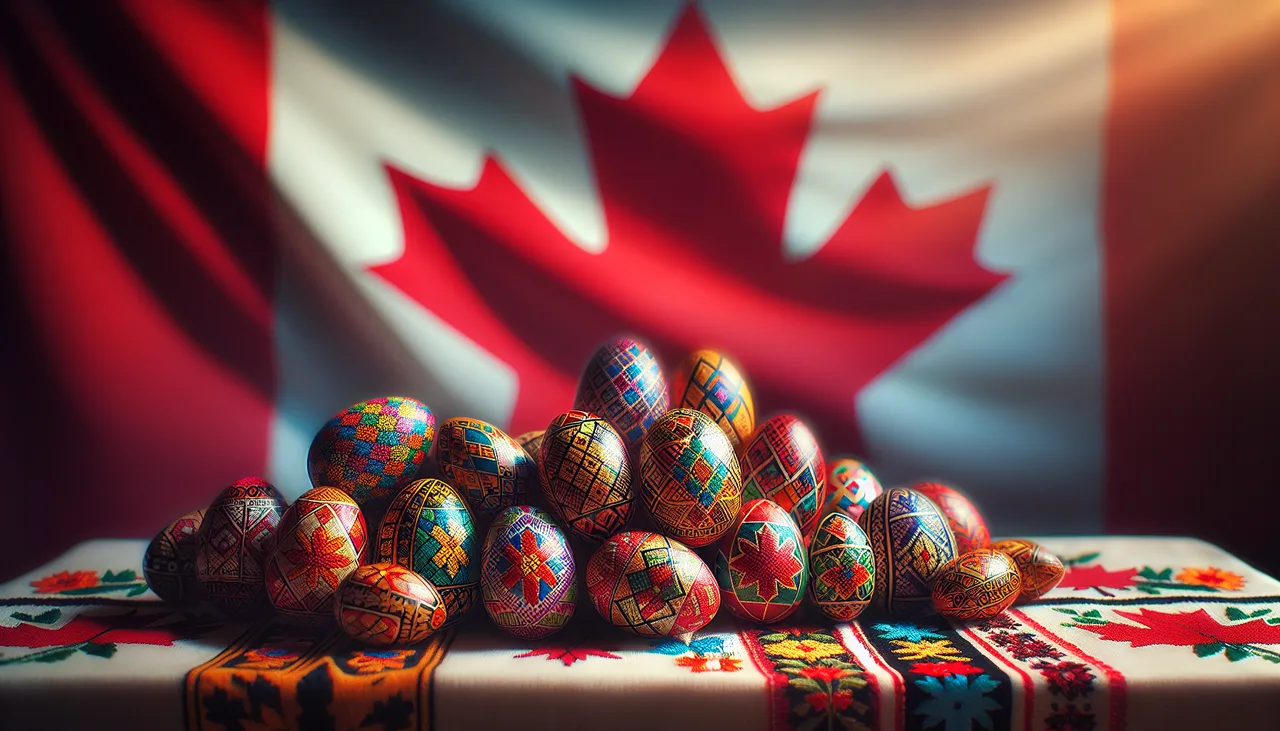
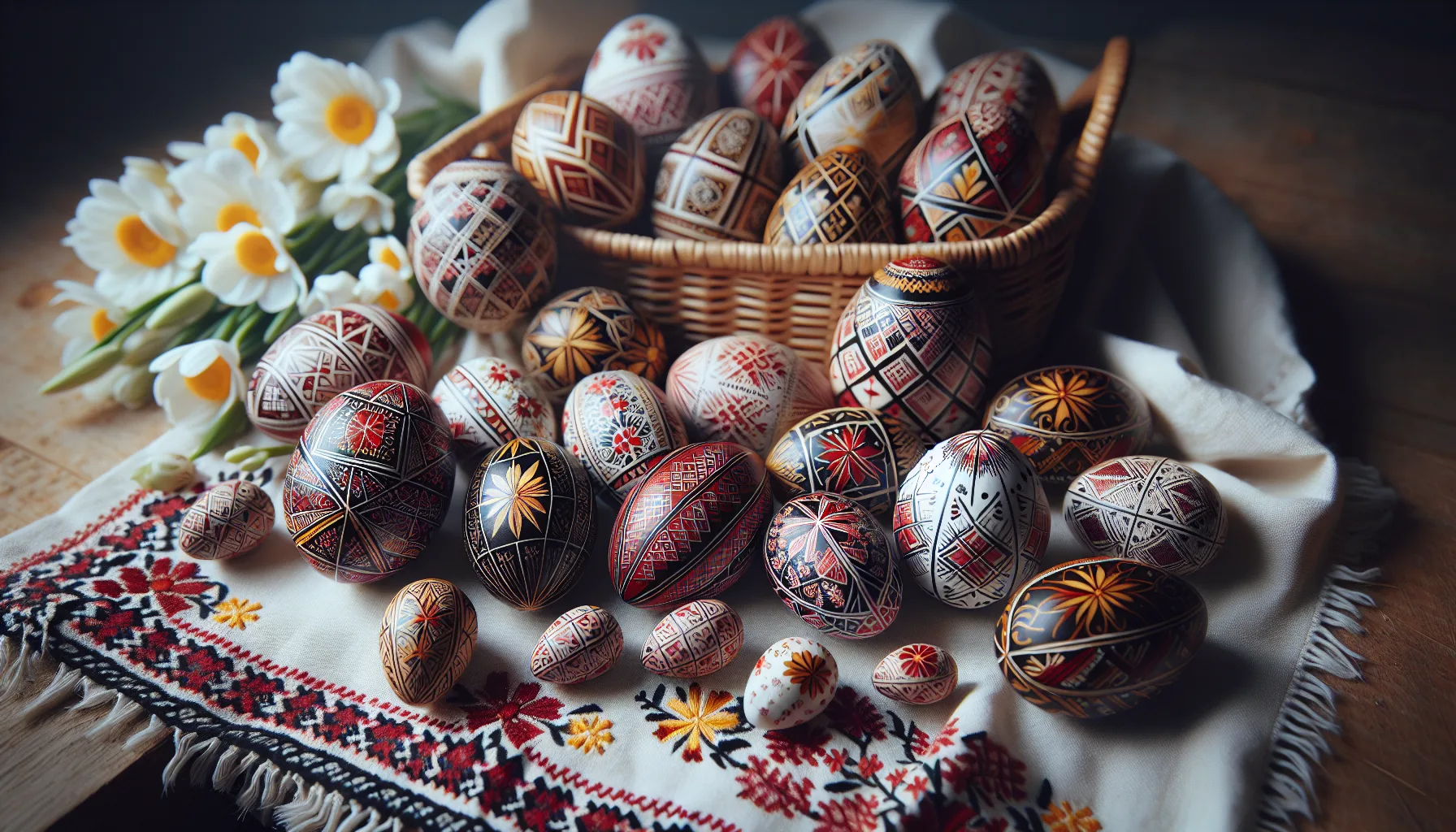
- Hard-boiled eggs and pysanky: eggs symbolize new life and resurrection. The decorated pysanky are works of art, while plain hard-boiled eggs are for eating.
- Salt: representing the essential spice of life and preservation.
- Cheese (syrets): a sweetened farmer’s cheese, sometimes called hrudka, shaped into a mound and symbolizing the gentleness of creation.
After the blessing, families return home for a festive Easter breakfast where the blessed foods are shared. This is a joyful, abundant meal — the end of the Lenten fast — and it often extends into a full day of visiting family and friends, with tables laden with the blessed foods plus additional dishes. For Ukrainian Canadians, the Easter basket blessing is one of those traditions that even lapsed churchgoers rarely miss, recognizing it as a moment where food, faith, family and identity converge in a single, deeply meaningful ritual.
Ukrainian Restaurants and Food Businesses in Canada
Ukrainian food in Canada exists on a spectrum from deeply private (a grandmother’s kitchen, a family’s Christmas Eve table) to thoroughly public (restaurants, food trucks, commercial frozen food brands). The commercial side of Ukrainian cuisine has grown steadily over the past century, driven by both demand from within the Ukrainian community and the enthusiastic adoption of Ukrainian dishes by the broader Canadian public.
Toronto’s Ukrainian Food Scene
Toronto, home to one of Canada’s largest Ukrainian communities, offers a rich Ukrainian food landscape. Bloor West Village, the neighborhood that hosts the annual Toronto Ukrainian Festival each September, is the historic heart of Ukrainian Toronto, and it remains home to bakeries, delis and restaurants that serve traditional dishes.
The Roncesvalles neighborhood, adjacent to Bloor West, has its own cluster of Ukrainian and Eastern European food businesses. Ukrainian bakeries here produce paska at Easter, pampushky year-round, and a variety of breads and pastries that draw customers from across the city. Several Eastern European delis in the area stock imported Ukrainian goods — pickled vegetables, candies, teas, canned goods and specialty ingredients that are difficult to find elsewhere.
The Ukrainian Kitchen and similar restaurants in the greater Toronto area serve as cultural ambassadors, offering non-Ukrainian diners an accessible introduction to the cuisine. Menus typically feature the classics — perogy platters, borscht, holubtsi, kovbasa, and nalysnyky — alongside more contemporary preparations. These restaurants often see a surge of interest around Ukrainian holidays and cultural events, and many have expanded their catering operations to serve corporate events, weddings and other functions where Ukrainian food adds a distinctive touch.
Ukrainian food trucks have become a growing presence at Toronto’s many summer festivals and food events. These mobile operations bring perogies, borscht and kovbasa to neighborhoods and events that might not have a permanent Ukrainian restaurant, expanding the reach of the cuisine and introducing it to new audiences. The annual Toronto Ukrainian Festival itself is one of the city’s premier food events, with dozens of food vendors serving everything from traditional perogies and holubtsi to more adventurous offerings like perogy poutine and borscht shots.
Across Canada: From Prairie Staples to West Coast Newcomers
If Toronto is the eastern hub of Ukrainian food culture in Canada, the prairies are its heartland. In Alberta, Saskatchewan and Manitoba, Ukrainian food is not ethnic cuisine — it is simply food. The density of Ukrainian settlement in these provinces over the past 130 years means that perogies, cabbage rolls, kovbasa and borscht are as common on local menus as burgers and fries.
Alberta stands out for its perogy-centric food culture. Perogy drive-throughs — a concept that exists almost nowhere else in the world — operate in several Alberta communities, serving boxes of freshly made perogies to customers who pull up in their trucks and cars. Edmonton, with its deep Ukrainian roots (the city has one of the highest concentrations of Ukrainian Canadians in the country), is home to numerous Ukrainian delis, bakeries and casual restaurants. The city’s annual heritage festivals always feature prominent Ukrainian food pavilions, and the Ukrainian Cultural Heritage Village east of the city offers historical food demonstrations alongside its pioneer settlement exhibits.
Winnipeg’s North End has been a Ukrainian neighborhood for over a century, and its food establishments reflect this history. Traditional Ukrainian restaurants here serve dishes that have changed little in decades, offering an authentic taste of the community’s culinary heritage. Winnipeg’s Folklorama festival, the largest multicultural festival in North America, consistently sees its Ukrainian pavilion ranked among the most popular, with lineups stretching around the block for perogies, borscht and kovbasa.
Saskatchewan contributes its own Ukrainian food traditions, with church-based cooking being particularly strong. Ukrainian church suppers in small Saskatchewan towns are legendary community events, drawing hundreds of people for homemade perogies, holubtsi and pampushky prepared by teams of volunteers using recipes that have not changed in generations.
Vancouver and the West Coast, while not traditionally Ukrainian population centers, have seen growing Ukrainian food options in recent years, driven partly by the post-2022 wave of Ukrainian newcomers. New Ukrainian cafes and popup restaurants have appeared, bringing contemporary Ukrainian cooking styles that reflect the food culture of modern Kyiv and Lviv alongside the traditional prairie fare.
The New Wave: Modern Ukrainian Cuisine
Ukrainian food in Canada is not frozen in the past. A new generation of chefs, food entrepreneurs and home cooks is reimagining Ukrainian cuisine for contemporary tastes, blending traditional techniques and flavors with modern approaches to create dishes that honor the heritage while pushing it forward.
Fusion and Innovation
The most visible trend in modern Ukrainian-Canadian cuisine is fusion — the creative blending of Ukrainian flavors and techniques with other culinary traditions. Perogy poutine, which replaces traditional poutine’s french fries with fried perogies, smothered in gravy and cheese curds, has become a festival favorite and a symbol of Ukrainian-Canadian cultural blending at its most delicious. Some restaurants have taken this further, offering perogy tacos, borscht ramen, and kovbasa charcuterie boards styled with the aesthetic sensibility of a contemporary wine bar.
Upscale borscht has appeared on fine-dining menus in Toronto, Montreal and Vancouver, where chefs treat the traditional beet soup as a canvas for refinement — consommé-clear borscht with creme fraiche and microgreens, roasted beet borscht with goat cheese croutons, or chilled summer borscht served in elegant glassware. These preparations introduce borscht to diners who might never have encountered it at a church supper, expanding appreciation for Ukrainian culinary tradition.
Ukrainian brunch menus have emerged as another innovation. Drawing on the tradition of nalysnyky (crepes), syrnyky (cottage cheese pancakes) and various egg dishes from the Ukrainian repertoire, several restaurants now offer weekend brunch services that frame Ukrainian food in the context of the contemporary brunch culture that dominates urban Canadian dining. Syrnyky served with fresh berries and honey, nalysnyky with smoked salmon and sour cream, and pyrizhky alongside a properly brewed cup of strong tea — these menus demonstrate that Ukrainian cuisine has brunch-worthy dishes that rival any French or American brunch classic.
The post-2022 arrivals from Ukraine have accelerated this modernization. Many newcomers bring with them experience of Ukraine’s own culinary renaissance, which saw cities like Kyiv, Lviv and Odesa develop vibrant modern restaurant scenes in the years before the full-scale invasion. These chefs and food professionals are now establishing themselves in Canadian cities, bringing contemporary Ukrainian cooking techniques and presentation styles that complement and revitalize the traditional dishes maintained by the established diaspora.
Ukrainian Food as Cultural Ambassador
Food is, by many accounts, the most effective cultural ambassador any community possesses, and this is certainly true for Ukrainian Canadians. While a non-Ukrainian Canadian might never attend a Ukrainian church service, visit a Ukrainian museum, or watch a hopak performance, the chances are very high that they have eaten a perogy, tasted borscht, or tried a cabbage roll. Food is the gateway through which millions of Canadians first encounter Ukrainian culture, and it creates a foundation of familiarity and goodwill upon which deeper cultural understanding can be built.
Ukrainian food festivals are the most public expression of this ambassadorial role. From the massive Toronto Ukrainian Festival to smaller community events in prairie towns, these festivals bring Ukrainian food directly to the public in an atmosphere of celebration and openness. The sight of a non-Ukrainian family sitting down to their first plate of perogies and borscht at a festival table, guided by a Ukrainian volunteer who explains each dish with pride, is one of the most common and heartwarming scenes in Canadian multicultural life.
Cooking classes have emerged as another popular vehicle for cultural exchange. Ukrainian cultural centers, community organizations and private instructors across Canada offer hands-on workshops in perogy making, borscht preparation, pysanky decorating and other traditions. These classes attract both Ukrainian Canadians reconnecting with their heritage and Canadians of other backgrounds who want to learn the skills behind the dishes they love.
Cookbook authors have played a vital role in preserving and disseminating Ukrainian food traditions. Community cookbooks published by Ukrainian church groups and women’s organizations have been bestsellers in prairie communities for decades. More recently, professionally published Ukrainian-Canadian cookbooks have reached national audiences, offering both traditional recipes and modern interpretations. These books serve as cultural archives as much as recipe collections, preserving techniques, stories and food traditions that might otherwise be lost as the generations who brought them from Ukraine pass on.
On social media, Ukrainian food has found a new audience. Instagram and TikTok food influencers of Ukrainian descent share recipes, cooking videos and food stories that reach hundreds of thousands of followers. A viral perogy-making video or a beautifully photographed borscht bowl does more to introduce Ukrainian culture to young Canadians than any formal cultural program could achieve. These digital ambassadors are ensuring that Ukrainian food traditions remain visible, relevant and appealing to a generation that discovers cuisine through screens as much as through family tables. The broader cultural context of these traditions is explored in our comprehensive guide to Ukrainian culture and traditions across Canada.
Where to Find Ukrainian Food in Canada
For Canadians looking to explore Ukrainian food — whether seeking authentic traditional dishes or curious about modern interpretations — the good news is that it has never been more accessible. The infrastructure for finding Ukrainian food in Canada spans commercial, community and digital channels.
Grocery stores are the most obvious starting point. Every major Canadian supermarket chain stocks frozen perogies, with brands like Cheemo and Baba’s dominating the freezer aisle. Many stores also carry jarred borscht, sauerkraut, and other Ukrainian staples. In cities with significant Ukrainian populations, specialty sections may include imported Ukrainian products such as sunflower halva, buckwheat, pickled vegetables and Ukrainian chocolates.
Ukrainian delis and specialty stores offer a deeper experience. These shops, found in Ukrainian neighborhoods in Toronto, Edmonton, Winnipeg, Saskatoon and other cities, sell homemade kovbasa, freshly baked breads, house-made perogies (far superior to their frozen counterparts), imported goods and seasonal specialties like paska at Easter and kutia ingredients at Christmas. Shopping at a Ukrainian deli is an education in itself — the staff can explain the products, suggest traditional preparations and share stories about the foods and their significance.
Farmers’ markets across Canada, particularly on the prairies, feature Ukrainian food vendors selling fresh perogies, borscht, baked goods and preserves. These market stalls are often run by home cooks working from family recipes, and the products they sell represent Ukrainian food at its most authentic and personal.
Church bazaars remain one of the best places to find traditional Ukrainian food. Ukrainian Catholic and Orthodox parishes across Canada hold annual bazaars, Christmas sales and Easter events where parishioners prepare and sell traditional dishes. The perogies and holubtsi sold at these events are almost always handmade by teams of volunteers using time-tested recipes, and the quality is typically exceptional. These events also offer baked goods, preserves and sometimes traditional crafts, making them a one-stop cultural experience.
Online ordering has expanded access to Ukrainian food beyond traditional geographic boundaries. Several Ukrainian food businesses now offer shipping across Canada, allowing customers in communities without Ukrainian populations to order frozen perogies, kovbasa, paska and other products directly to their doors. This development has been particularly welcome for Ukrainian Canadians who have moved away from their home communities and miss the foods of their childhood.
For those visiting Canada’s major cities, a food-focused exploration of the Ukrainian community is richly rewarding. A morning at a Ukrainian bakery, lunch at a perogy restaurant, an afternoon browsing a Ukrainian deli, and an evening at a food festival or church supper provides a deep and delicious immersion in one of the most important and enduring culinary traditions in Canadian life. As we document in our profile of the Ukrainian community in Toronto, the city offers particularly rich opportunities for this kind of cultural food exploration.