In brief: Ukrainian culture in Canada encompasses a rich tapestry of traditions spanning food, music, dance, religious customs and community life. From varenyky and borscht on dinner tables to the thundering hopak on festival stages, from pysanky workshops at Easter to the solemn twelve-dish supper on Christmas Eve, Ukrainian Canadians have built one of the most culturally active diaspora communities in the world. Supported by churches, language schools, cultural organizations and major festivals, these traditions continue to thrive and evolve as new waves of immigrants bring fresh energy to centuries-old customs.
Ukrainian Culture in Canada: An Overview
When the first Ukrainian settlers arrived in the Canadian prairies in the 1890s, they brought with them far more than farming tools and a willingness to work. They carried songs, recipes, embroidery patterns, religious customs and a fierce determination to preserve their identity in a new land. More than 130 years later, that determination has produced one of the most impressive cultural preservation stories in the history of immigration.
Canada's official multiculturalism policy, adopted in 1971, gave institutional support to what Ukrainian communities had already been doing for decades: maintaining their language, traditions and cultural practices while fully participating in Canadian civic life. The result is a community where a third-generation Ukrainian Canadian in Edmonton might attend a Saturday language school, dance hopak at a local ensemble, and help her grandmother prepare kutia for Christmas Eve, all while living a thoroughly modern Canadian life.
The history of Ukrainians in Canada spans five distinct immigration waves, each bringing new cultural influences and revitalizing traditions that might otherwise have faded. The earliest settlers established the foundations: churches, community halls and mutual aid societies. Later waves brought intellectuals, artists and professionals who enriched the community's cultural institutions. And the most recent arrivals, particularly those who came after Russia's full-scale invasion of Ukraine in 2022, have brought a renewed sense of urgency to the preservation and celebration of Ukrainian identity.
What makes the Ukrainian cultural presence in Canada remarkable is not just its persistence but its visibility. Ukrainian festivals draw hundreds of thousands of attendees. Perogies (varenyky) are a Canadian grocery store staple. The world's largest pysanka sculpture stands in Vegreville, Alberta. Ukrainian churches with their distinctive domes mark the skyline in cities and towns across the prairies. This is not a culture preserved in museum displays; it is a living tradition woven into the fabric of Canadian life.
Traditional Ukrainian Food in Canada
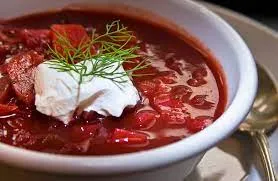
Perhaps no aspect of Ukrainian culture has integrated into Canadian life as thoroughly as the food. Ukrainian cuisine is hearty, seasonal and deeply tied to agricultural traditions and the religious calendar. In Canada, these dishes have moved far beyond the Ukrainian community to become part of the national culinary identity.
Varenyky (perogies) are arguably the most iconic Ukrainian contribution to Canadian cuisine. These filled dumplings, typically stuffed with potato and cheese, sauerkraut, or meat, have become so ubiquitous that many Canadians do not even think of them as Ukrainian food. They are sold frozen in every major grocery chain, served in restaurants from Halifax to Vancouver, and remain a centerpiece of every Ukrainian community event. The town of Glendon, Alberta, even erected a giant perogy statue to celebrate this beloved dish.
Borscht, the vibrant beet soup, is another staple that has crossed cultural boundaries. Every Ukrainian Canadian family has its own recipe, passed down through generations, and debates about the "correct" way to make borscht can be as passionate as any political discussion. Traditional borscht is made with beets, cabbage, potatoes, carrots and onions, often finished with a generous dollop of sour cream.
Other essential dishes in the Ukrainian Canadian kitchen include:
- Holubtsi (cabbage rolls): stuffed with rice and meat or buckwheat, baked in tomato sauce
- Kovbasa: garlic sausage that is a staple at every Ukrainian gathering
- Pampushky: deep-fried doughnuts, often filled with jam or poppy seeds, served at festivals and family celebrations
- Kutia: a ceremonial dish of wheat berries, poppy seeds and honey, served as the first course of the Christmas Eve supper
- Paska: a rich Easter bread, often decorated with braided dough, blessed at church on Easter morning
- Nalysnyky: thin crepes filled with cottage cheese, rolled and baked with cream
Ukrainian Canadian food traditions are not static. Modern Ukrainian Canadian cooks experiment with fusion approaches, creating perogy pizza, borscht-inspired salads, and gourmet versions of traditional dishes. Community cookbooks published by church groups and women's organizations have been bestsellers in Canadian prairie communities for decades, serving as both recipe collections and cultural archives.
Music and Dance: Hopak, Bandura and Beyond
Ukrainian music and dance are among the most visually spectacular and emotionally powerful expressions of the culture, and they have thrived in Canada like nowhere else outside Ukraine itself.
The hopak, Ukraine's national dance, is a high-energy performance featuring acrobatic leaps, spinning kicks and precise footwork that demands years of training. In Canada, Ukrainian dance ensembles operate in virtually every city with a significant Ukrainian population. The most prestigious include the Shumka Ukrainian Dancers of Edmonton, founded in 1959, which has performed on international stages and produced award-winning films of their performances. The Rusalka Dance Ensemble in Winnipeg and the Desna Ukrainian Dance Company in Toronto are equally accomplished.
These ensembles serve a dual purpose: they train young Ukrainian Canadians in their cultural heritage while introducing audiences of all backgrounds to the beauty and athleticism of Ukrainian dance. Many Ukrainian Canadian children begin dance training as young as four or five, and the discipline, teamwork and cultural knowledge they gain stays with them for life.
The bandura, Ukraine's national string instrument, has a distinctive sound that is instantly recognizable. Bandurist ensembles in Canada preserve a musical tradition that was actively suppressed in Soviet-era Ukraine, where bandurists were persecuted as carriers of dangerous national identity. The Canadian Bandurist Capella, based in Toronto, has been performing since the 1940s and has released multiple recordings. Their work represents not just artistic achievement but an act of cultural preservation that kept a tradition alive when it was under threat in its homeland.
Ukrainian choral music is equally important to the community. Church choirs perform liturgical music in the Byzantine tradition, while secular choirs perform folk songs, classical compositions and contemporary works. The Ukrainian community in Canada has produced internationally recognized musicians, conductors and composers who bridge Ukrainian and Western musical traditions.
Easter Traditions: Pysanky and Basket Blessings
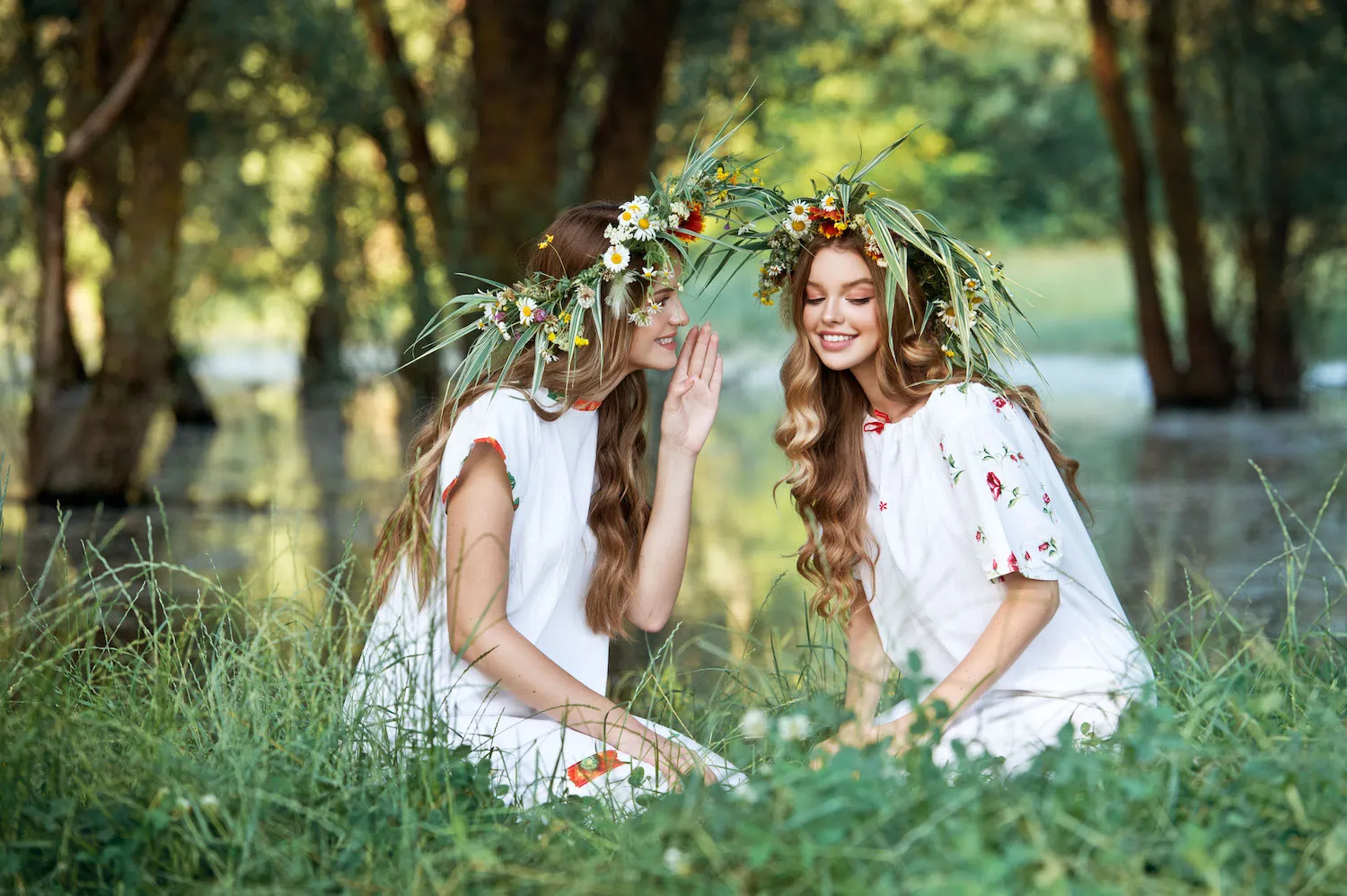
Easter is the most important holiday in the Ukrainian religious calendar, and Ukrainian Canadians celebrate it with a rich set of traditions that blend Christian observance with pre-Christian symbolism.
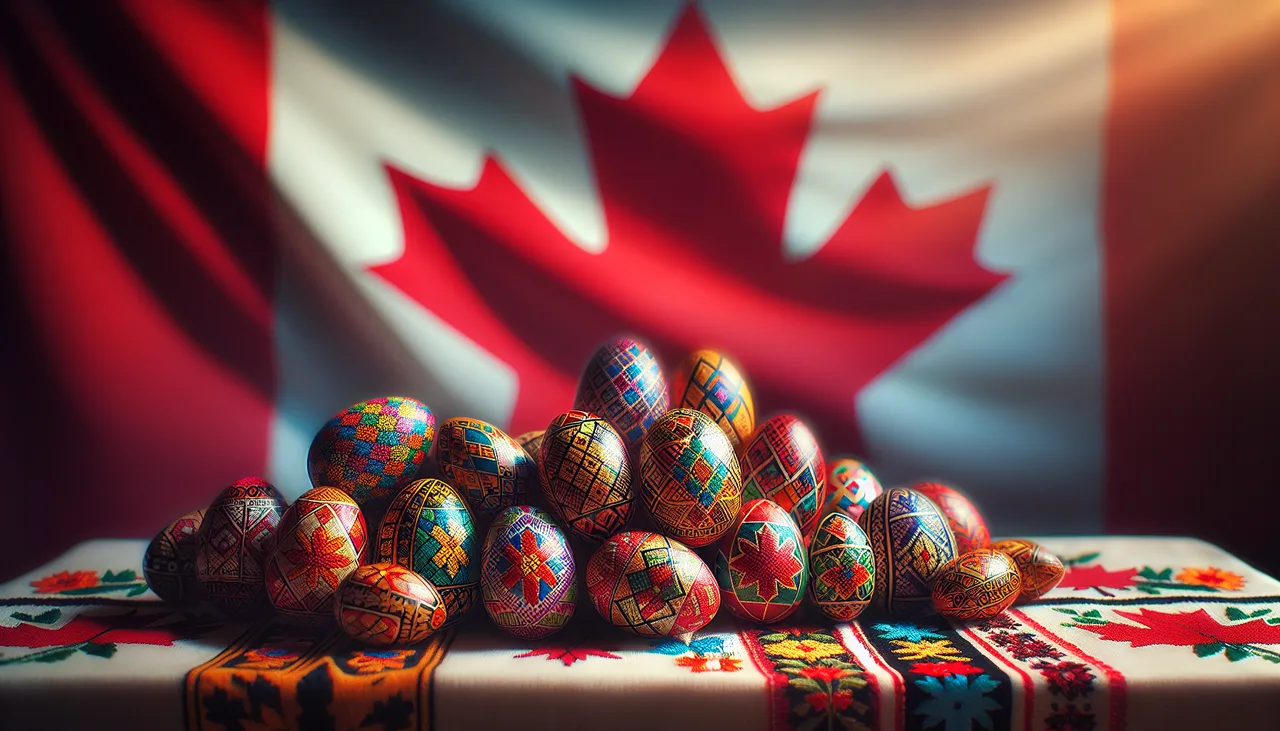
Pysanky, the art of decorating Easter eggs using a wax-resist dyeing technique, is perhaps the most widely recognized Ukrainian tradition in Canada. The word comes from the Ukrainian verb "pysaty," meaning "to write," because the designs are written onto the egg with a stylus called a kistka. Traditional motifs include geometric patterns, plant forms, animals and religious symbols, each carrying specific meaning. A pine tree symbolizes eternal youth; a deer represents wealth; a sun motif represents life and growth.
In Canada, pysanky-making workshops are offered at Ukrainian cultural centers, churches, museums and public libraries, particularly in the weeks leading up to Easter. The tradition has been embraced far beyond the Ukrainian community, with Canadians of all backgrounds attending workshops and creating their own eggs. The giant pysanka sculpture in Vegreville, Alberta, standing over nine meters tall and weighing more than two tonnes, has become one of the most photographed landmarks on the Canadian prairies.
The Easter basket blessing (sviachene) is another cherished tradition. On Easter morning, families bring baskets filled with symbolic foods to church for blessing: paska (Easter bread), kovbasa (sausage), butter shaped into a lamb, horseradish, salt, cheese and pysanky. Each food carries meaning: the bread represents Christ, the sausage represents God's favor, the horseradish symbolizes the bitterness of sacrifice. After the blessing, families return home for a festive breakfast where these blessed foods are shared.
For many Ukrainian Canadians, the Easter basket tradition is a powerful connection to their heritage. Even those who are not regular churchgoers often return for the Easter basket blessing, recognizing it as a moment when food, faith, family and cultural identity come together in a single, meaningful ritual.
Christmas Traditions: Sviata Vecheria and Koliadky
Ukrainian Christmas traditions in Canada are among the most distinctive and carefully preserved cultural practices in the diaspora. Many Ukrainian Canadians celebrate Christmas on January 7, following the Julian calendar used by the Ukrainian Orthodox and some Ukrainian Catholic churches, though an increasing number now observe December 25 or celebrate both dates.
The heart of Ukrainian Christmas is Sviata Vecheria (Holy Supper), the Christmas Eve meal. This is a twelve-dish meatless supper, with each dish representing one of the twelve apostles. The meal begins when the first star appears in the evening sky, a reminder of the Star of Bethlehem. Traditional dishes include:
- Kutia: wheat berries with poppy seeds and honey, always the first dish served
- Borscht: a clear beet soup, often with vushka (small mushroom-filled dumplings)
- Varenyky: filled with potato, sauerkraut or fruit
- Fish: often herring, baked pike or fried carp
- Holubtsi: meatless cabbage rolls with rice and mushrooms
- Mushroom dishes: gravy, stuffed mushrooms or marinated varieties
- Compote (uzvar): a stewed dried fruit drink that concludes the meal
The table is prepared with specific symbolic elements: a didukh (a sheaf of wheat representing ancestors and the harvest) is placed in the corner of the room, hay is spread under the tablecloth to symbolize the manger, and an extra place setting is laid for departed family members or unexpected guests. A candle burns throughout the meal.
Koliadky (Christmas carols) are sung both at the Sviata Vecheria table and by groups of carolers who go from house to house in the days following Christmas. Ukrainian carols are melodically rich and lyrically diverse, ranging from solemn religious hymns to lively songs celebrating the season. In Canadian cities with large Ukrainian populations, organized groups of koliadnyky still go door to door, a tradition that connects modern Ukrainian Canadians directly to a custom that predates Christianity in Ukraine.
Churches and Religious Life
Ukrainian churches in Canada are far more than places of worship. They serve as the institutional backbone of the community, functioning as cultural centers, social gathering places, language schools and settlement support hubs.
The two major Ukrainian Christian denominations in Canada are the Ukrainian Catholic Church (Byzantine rite, in communion with Rome) and the Ukrainian Orthodox Church of Canada. Both maintain extensive parish networks across the country, conduct services in Ukrainian (often with English), and play a central role in community life.
Architecturally, Ukrainian churches are among the most distinctive buildings in Canadian communities. The characteristic onion domes, inspired by Byzantine and Baroque traditions, mark the landscape across the prairies and in urban neighborhoods. St. Vladimir's Ukrainian Orthodox Cathedral in Toronto is one of the most prominent, serving as both a parish church and a cultural landmark. In the prairies, many of the earliest Ukrainian churches are now designated heritage sites, recognized for their architectural significance and their role in the community's history.
Churches have been especially important in welcoming newcomers during each wave of immigration. After 2022, Ukrainian churches across Canada mobilized rapidly to help the hundreds of thousands of Ukrainians arriving under the Canada-Ukraine Authorization for Emergency Travel (CUAET) program. Parishes organized housing, employment assistance, language classes and emotional support, demonstrating the continuing relevance of these institutions to community life.
The artistic traditions associated with Ukrainian churches, including iconography, embroidered liturgical textiles and choral music in the Byzantine tradition, represent some of the highest expressions of Ukrainian culture in Canada. Many churches commission Ukrainian Canadian artists to create icons and interior decorations, ensuring that these art forms are transmitted to new generations.
Language Schools and Education
Language preservation has been a priority for the Ukrainian Canadian community since its earliest days. The primary vehicle for this effort is the network of ridni shkoly (Saturday schools) that operate in most major Canadian cities. These schools offer instruction in Ukrainian language, literature, history and culture, typically for children aged five through eighteen, though adult programs also exist.
Beyond community-run schools, several Canadian provinces offer Ukrainian bilingual education in the public school system. Alberta, Saskatchewan and Manitoba all maintain Ukrainian-English bilingual programs where students receive instruction in both languages from kindergarten through high school. These programs are particularly strong in Alberta, where the Ukrainian Bilingual Program has operated since the 1970s and serves thousands of students annually.
At the post-secondary level, the University of Alberta's Canadian Institute of Ukrainian Studies is the preeminent center for Ukrainian scholarship outside Ukraine. It publishes academic journals, maintains archives, funds research and supports scholars working on Ukrainian history, language, literature and political science. The University of Toronto also offers Ukrainian language and cultural studies through its Slavic languages department.
The arrival of post-2022 immigrants has given Ukrainian language education new momentum. Many newcomers are Ukrainian-dominant speakers who enroll their children in bilingual programs, volunteer at ridni shkoly, and participate in adult language exchange programs. This influx has helped counteract the gradual language shift toward English that had been occurring in established diaspora families, creating intergenerational exchanges where newcomers share contemporary Ukrainian while established families share knowledge of Canadian systems and culture.
Festivals and Community Events

Ukrainian festivals in Canada are major cultural events that attract participants far beyond the Ukrainian community, serving as both celebrations of heritage and introductions to Ukrainian culture for the broader public.
The Toronto Ukrainian Festival, held annually in September along Bloor West Village, is one of the largest Ukrainian street festivals in North America. Over three days, it features live music and dance performances on multiple stages, a massive food court serving traditional dishes, artisan vendors, pysanky demonstrations, embroidery exhibits and children's activities. The festival regularly draws over 500,000 visitors, making it one of the biggest cultural events in Toronto's packed festival calendar.
Canada's National Ukrainian Festival in Dauphin, Manitoba, is the country's longest-running Ukrainian festival, held annually since 1966. Set in Selo Ukraina, a recreated pioneer village, the festival offers a deep immersion in Ukrainian Canadian heritage. Visitors can tour traditional farmsteads, watch bread-baking demonstrations, attend dance workshops and enjoy performances by top Ukrainian and Ukrainian Canadian artists.
Other major festivals and events include:
- Edmonton's Ukrainian Festival: celebrating the city's deep Ukrainian roots in one of Canada's most Ukrainian cities
- Winnipeg Folklorama's Ukrainian Pavilion: consistently one of the most popular pavilions at North America's largest multicultural festival
- Saskatoon's Vesna Festival: a spring celebration of Ukrainian culture featuring dance competitions and cultural showcases
- Montreal's Ukrainian Festival: bringing Ukrainian culture to Quebec's largest city
- Vegreville Pysanka Festival: celebrating the town's famous giant pysanka sculpture and Ukrainian heritage
Since 2022, these festivals have taken on additional meaning as expressions of solidarity with Ukraine. Many have added fundraising components, hosted displaced Ukrainian artists, and incorporated awareness-raising activities about the ongoing war. The Ukrainian community in Toronto has been particularly active in organizing solidarity events alongside traditional cultural celebrations. For those interested in how these traditions intersect with the broader Ukrainian experience abroad, our analysis of the specifics of the Ukrainian diaspora in Canada provides deeper context.
Cultural Organizations and the Future
The institutional infrastructure supporting Ukrainian culture in Canada is remarkably well developed. The Ukrainian Canadian Congress (UCC), founded in 1940, serves as the national umbrella organization representing the community's interests. It coordinates cultural programming, advocates on political issues affecting Ukraine and Ukrainian Canadians, and supports community organizations across the country.
Other key organizations include:
- Ukrainian National Federation: one of the oldest Ukrainian Canadian organizations, operating cultural centers in several cities
- Ukrainian Women's Association of Canada: promoting cultural education, publishing and community service since 1926
- Plast Ukrainian Scouting Organization: providing youth programs that combine outdoor activities with cultural education
- Ukrainian Youth Association (SUM): running summer camps, cultural programs and sports leagues for young Ukrainian Canadians
- Ukrainian museums and archives: including the Ukrainian Museum of Canada in Saskatoon and the Ukrainian Canadian Archives and Museum of Alberta
The future of Ukrainian culture in Canada looks vibrant. The post-2022 wave of immigration has brought tens of thousands of Ukrainians who carry fresh, direct connections to contemporary Ukrainian culture. They are joining established community institutions, starting new initiatives, and creating bridges between the diaspora's preserved traditions and the living culture of modern Ukraine. As the cultural landscape organization Ukraine Zoom documents, Ukrainian cultural identity continues to evolve and find new expressions around the world.
At the same time, long-established Ukrainian Canadian families bring generational depth, institutional knowledge and a uniquely Canadian Ukrainian perspective that has developed over more than a century. The interaction between these groups, newcomers with contemporary Ukrainian experience and established families with deep Canadian roots, is producing a dynamic cultural renewal that promises to keep Ukrainian traditions alive and evolving for generations to come.
This cultural vitality extends to the broader community structures documented in our article on the Ukrainian diaspora in Canada and the community networks that Ukrainians have built across Canadian cities. Together, these institutions and traditions form a comprehensive cultural ecosystem that ensures Ukrainian heritage will remain a visible, vibrant and valued part of Canadian life.
Preserving Traditions Abroad: How Canadian Ukrainians Keep the Culture Alive
The survival of Ukrainian culture in Canada is no accident. It is the result of deliberate, sustained effort by generations of Ukrainian Canadians who understood that traditions do not preserve themselves. Across the country, a network of institutions, programs and grassroots initiatives ensures that Ukrainian traditions remain a living practice rather than a fading memory. From Saturday morning language classes in church basements to sold-out dance performances on national stages, the mechanisms of cultural transmission are as diverse as the community itself.
What distinguishes the Canadian Ukrainian experience from many other diaspora stories is its institutional depth. While individual families pass down recipes and holiday customs at the kitchen table, the community has also built formal structures that reinforce these practices on a larger scale. The interplay between private family tradition and public institutional support creates a resilient cultural ecosystem where Ukrainian traditions can adapt to new circumstances without losing their essential character. Our detailed guide to Ukrainian culture and Canadian traditions explores how this dynamic plays out across different regions of the country.
Schools, Ensembles and Church Programs: The Pillars of Cultural Continuity
Saturday schools, known as ridni shkoly, remain the cornerstone of Ukrainian cultural education in Canada. Operating in virtually every major city, these schools teach children the Ukrainian language, history, geography and literature, ensuring that even fourth- and fifth-generation Ukrainian Canadians maintain a meaningful connection to their ancestral language. In cities like Toronto, Edmonton, Winnipeg and Montreal, enrollment in these programs has surged since 2022 as newly arrived Ukrainian families seek community connections and established families are inspired to re-engage with their heritage.
Ukrainian dance ensembles represent another vital pillar of cultural preservation. Groups such as Shumka in Edmonton and Arkan in Winnipeg are not merely performance troupes; they are training grounds where young Ukrainian Canadians develop discipline, physical skill and a deep appreciation for their cultural heritage. These ensembles tour internationally, compete at festivals and serve as ambassadors for Ukrainian culture in Canada. For many participants, the years spent in a dance ensemble form the foundation of a lifelong cultural identity.
Church-based cultural programs complete this institutional triad. Ukrainian Catholic and Ukrainian Orthodox parishes across Canada host language classes, choir rehearsals, youth groups, cultural workshops and seasonal celebrations that draw families into regular engagement with their heritage. These programs are particularly important in smaller communities where a Saturday school or dance ensemble may not be viable on its own. The church provides the physical space, the organizational structure and the intergenerational community needed to keep Ukrainian traditions alive.
Festivals, Museums and the Digital Revival of Ukrainian Heritage
Ukrainian festivals across Canada serve as the most visible public expression of the community's cultural vitality. The Toronto Ukrainian Festival, Edmonton Heritage Days and Winnipeg Folklorama each attract enormous audiences, introducing hundreds of thousands of non-Ukrainian Canadians to traditional food, music, dance and crafts every year. These events are not merely nostalgic; they are dynamic showcases where established traditions meet contemporary Ukrainian culture, creating a dialogue between the old and the new that keeps the heritage fresh and relevant.
Institutions such as the Ukrainian Canadian Archives and Museum of Alberta in Edmonton and the Taras Shevchenko Museum in Toronto play a quieter but equally important role. They collect, preserve and exhibit artifacts, documents and artworks that tell the story of Ukrainian life in Canada. Their archival holdings are invaluable resources for researchers, genealogists and community members seeking to understand their family histories and the broader patterns of Ukrainian settlement in Canada.
In recent years, social media and YouTube have emerged as powerful tools for connecting Ukrainian Canadian generations. Young creators share videos of traditional cooking techniques learned from their babas, tutorials on vyshyvanka embroidery patterns, and documentation of cultural events that reach audiences far beyond any single community. The vyshyvanka, the traditional Ukrainian embroidered shirt, has experienced a remarkable revival as a fashion statement, worn proudly at festivals, graduation ceremonies and even in professional settings as an expression of cultural identity. Cookbook traditions, once passed from grandmother to grandchild through handwritten recipe cards, now circulate through food blogs, Instagram accounts and self-published digital collections, ensuring that the flavors of Ukrainian heritage reach kitchens across the continent.