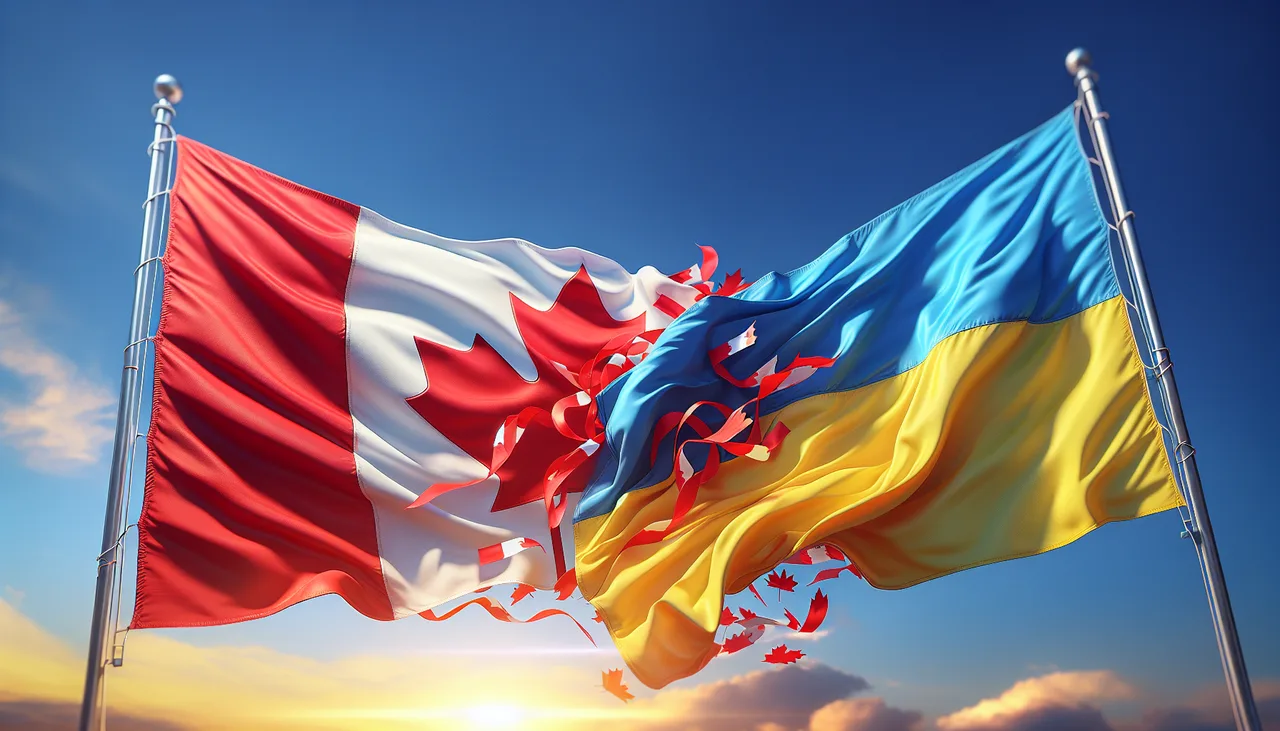
In brief: Ukrainian-Canadian identity is a living, evolving blend of Old World heritage and New World belonging. Shaped by over 130 years of immigration, it is expressed through language, faith, food, community organizations, and political activism. Today, with fresh waves of refugees from war-torn Ukraine, this identity is being reimagined once more, bridging the established diaspora with newcomers who carry a direct, urgent connection to the homeland.
The Dual Identity: Ukrainian and Canadian
To be Ukrainian-Canadian is to inhabit two worlds at once. It is to grow up hearing baba sing lullabies in Ukrainian while watching Hockey Night in Canada on the living room television. It is to feel a swell of pride when the blue-and-yellow flag appears at a protest in Ottawa, and an equally deep pride when O Canada plays before a Maple Leafs game. This dual identity is not a contradiction; it is the defining feature of what it means to be a Canadian Ukrainian in the twenty-first century.
Canada's multiculturalism policy, enshrined in the 1988 Multiculturalism Act, provides the legal and cultural framework that allows Ukrainian-Canadians to maintain their heritage without sacrificing their belonging. Unlike assimilationist models found in other countries, Canada actively encourages its citizens to preserve their ancestral cultures. For the Ukrainian community in Canada, this has meant the freedom to build churches, establish schools, publish newspapers, and organize festivals without fear of cultural suppression.
Yet the dual identity is not always comfortable. Many Ukrainian-Canadians describe a sense of being "not Ukrainian enough" for relatives in Ukraine and "too Ukrainian" for mainstream Canadian society. Third-generation members may feel guilt about losing the language, while new arrivals sometimes view the diaspora's preserved traditions as frozen in time, disconnected from the modern Ukraine they left behind. These tensions are not flaws in the identity; they are the natural growing pains of a community that spans continents and centuries.
What unites all Ukrainian-Canadians, whether they arrived on the prairies in 1896 or at Pearson Airport in 2022, is a commitment to the idea that Ukrainian culture in Canada is not merely an artifact to be preserved in a museum, but a living tradition that adapts, grows, and contributes to the broader Canadian mosaic. This commitment is what transforms a collection of individuals with shared ancestry into a genuine community with shared purpose.
Language Preservation Across Generations
Language is often called the soul of a culture, and for Ukrainian-Canadians, the fate of the Ukrainian language in Canada has been a central concern for generations. The story of Ukrainian in Canada is one of resilience, loss, and unexpected revival.
The first wave of Ukrainian immigrants, arriving between 1891 and 1914, spoke Ukrainian as their daily language and had little choice but to learn English gradually. Their children grew up bilingual, switching effortlessly between Ukrainian at home and English at school. By the third generation, however, the pattern that linguists call "language shift" was well underway. English became the dominant language in Ukrainian-Canadian households, and Ukrainian retreated to the domains of church, cultural events, and conversations with grandparents.
Efforts to reverse this decline have taken many forms. Ukrainian bilingual education programs, first established in Alberta in 1974 and later expanded to Saskatchewan and Manitoba, allow students to receive half their instruction in Ukrainian. Saturday morning Ukrainian-language schools, known as ridna shkola, have operated in communities across Canada for over a century. The rich traditions of Ukrainian culture are often taught through these programs, ensuring that language and cultural knowledge are transmitted together.
The digital age has brought new tools for language preservation. Ukrainian-language podcasts, YouTube channels, apps like Duolingo, and social media groups connect Ukrainian-Canadians with the living language as it is spoken in Ukraine today. For many in the community, especially younger members, these tools have made Ukrainian more accessible than it has been in decades.
Then came the post-2022 wave. The arrival of hundreds of thousands of Ukrainian speakers through the Canada-Ukraine Authorization for Emergency Travel (CUAET) program transformed the linguistic landscape of Ukrainian-Canadian communities almost overnight. Suddenly, Ukrainian was heard in grocery stores, on public transit, and in playgrounds where it had been absent for years. For established Ukrainian-Canadians, this was both exhilarating and humbling, a reminder of how much of the language they had lost and how much they could regain.
Churches and Faith as Community Pillars
If language is the soul of Ukrainian-Canadian identity, the church is its heart. From the earliest days of Ukrainian settlement on the Canadian prairies, churches served as far more than places of worship. They were the first community buildings, the first schools, and the first gathering places where Ukrainian settlers could speak their language, practice their customs, and find comfort among people who understood their world.
Two major denominations have anchored Ukrainian-Canadian spiritual life: the Ukrainian Catholic Church (Byzantine rite, in communion with Rome) and the Ukrainian Orthodox Church of Canada. Together, they have built hundreds of churches across the country, many of them architectural treasures with distinctive onion domes that have become landmarks in prairie towns and urban neighbourhoods alike.
The church calendar structures much of Ukrainian-Canadian cultural life. Christmas, celebrated on January 7 according to the Julian calendar (though some parishes have shifted to December 25), brings Sviat Vechir, the Holy Supper with its twelve meatless dishes. Easter is marked by the blessing of paska bread and pysanky eggs, traditions that have become widely known beyond the Ukrainian community. The history of Ukrainian immigration to Canada is inseparable from the history of these churches, which were often the first institutions established in new settlements.
Beyond liturgy, churches have been engines of community organization. Church basements have hosted perogy-making sessions that doubled as social gatherings, youth groups that instilled Ukrainian identity in new generations, and fundraising events that supported everything from local community centres to humanitarian aid for Ukraine. The church choir tradition, with its haunting polyphonic choral music rooted in the Byzantine tradition, has produced some of Canada's finest choral ensembles.
Yet the churches also face challenges. Attendance has declined among younger Ukrainian-Canadians, many of whom feel disconnected from the liturgical language and traditional practices. Some parishes have responded by introducing more English into services, modernizing their programming, and reaching out to new arrivals from Ukraine. The tension between preserving tradition and adapting to changing demographics is a microcosm of the broader challenge facing Ukrainian-Canadian identity as a whole.
Community Organizations and Civic Life
The organizational life of Ukrainian-Canadians is remarkably rich and complex. From national umbrella bodies to local dance troupes, the community of Ukrainians in Canada has built an institutional infrastructure that few other diaspora groups can match.
At the national level, the Ukrainian Canadian Congress (UCC) has served as the community's political voice since its founding in 1940. The UCC coordinates advocacy efforts, organizes national commemorations, and represents Ukrainian-Canadian interests to the federal government. Its provincial councils and local branches extend this work to every region of the country.
Youth organizations have been particularly important in transmitting Ukrainian identity across generations. Plast Ukrainian Scouting Organization and the Canadian Ukrainian Youth Association (CYM) combine outdoor activities, leadership training, and cultural education in programs that have shaped thousands of young Ukrainian-Canadians. Many of today's community leaders trace their commitment to Ukrainian causes back to summers spent at Plast or CYM camps.
Women's organizations, including the Ukrainian Women's Association of Canada and the Ukrainian Catholic Women's League, have been the unsung backbone of community life. They have organized cultural events, maintained church life, raised funds for charitable causes, and preserved domestic arts like embroidery and traditional cooking that are central to Ukrainian cultural expression.
Community centres and narodni domy (national homes) serve as physical anchors for Ukrainian-Canadian life in cities and towns across the country. These halls host dances, concerts, art exhibitions, lectures, and community meetings. In cities like Toronto, where the Ukrainian community is particularly vibrant, these centres are busy year-round with programming for all ages.
The challenge facing these organizations is one of relevance. Many were founded to serve a community that no longer exists in the same form. Membership in traditional organizations has aged and shrunk, and younger Ukrainian-Canadians often prefer informal, digital forms of community engagement. The arrival of new immigrants has brought fresh energy but also new expectations; newcomers from Ukraine do not always see themselves reflected in organizations that were shaped by a diaspora culture they never experienced.
Festivals and Cultural Events
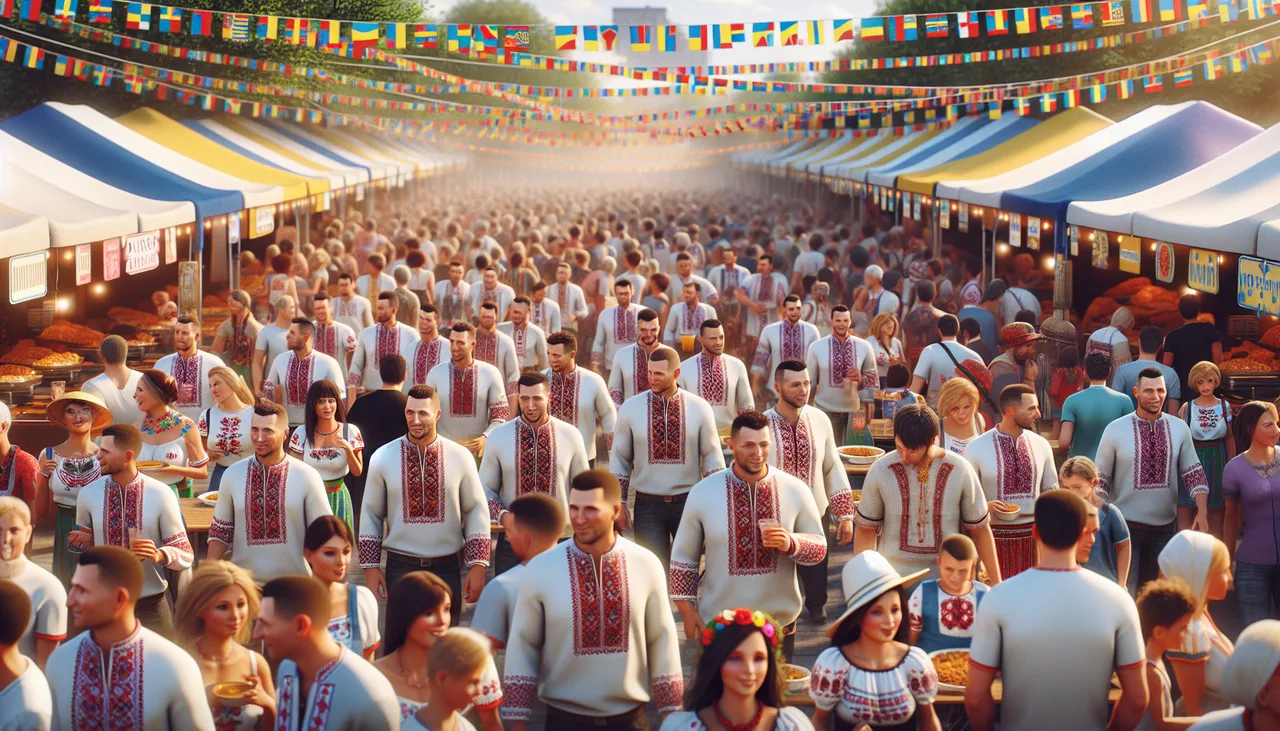
If there is one aspect of Ukrainian-Canadian identity that transcends generational and political divides, it is the festival. Ukrainian-Canadian festivals are joyful, colourful celebrations that bring together food, music, dance, and art in a way that is both authentically Ukrainian and distinctly Canadian.
The granddaddy of them all is Canada's National Ukrainian Festival in Dauphin, Manitoba, which has been running since 1966. Over three days each summer, Dauphin transforms into a celebration of all things Ukrainian, with performances by dance ensembles, bandura players, and folk singers, alongside competitions, workshops, and enough perogies to feed a small army. The festival draws visitors from across Canada and the United States, and for many Ukrainian-Canadians, it is an annual pilgrimage.
In Toronto, the Bloor West Village Ukrainian Festival has become one of the city's marquee summer events. The festival takes over several blocks of Bloor Street West with stages, food vendors, artisan booths, and interactive cultural demonstrations. It is a showcase not only for the established Ukrainian diaspora but also for the evolving, contemporary culture of Ukraine itself, with modern Ukrainian musicians and artists increasingly featured alongside traditional performers.
Beyond the major festivals, Ukrainian-Canadian cultural life includes a rich calendar of smaller events: Christmas concerts, Easter bazaars, zabava dances, embroidery workshops, pysanka-writing classes, film screenings, and art exhibitions. Ukrainian dance, with its athleticism and vibrant costumes, is perhaps the most visible expression of Ukrainian-Canadian culture, and dance schools across the country train thousands of young performers each year. Ensembles like the Shumka Dancers of Edmonton and the Arkan Dance Company of Winnipeg have achieved international recognition.
These festivals and events serve a dual purpose. For Ukrainian-Canadians, they are opportunities to reconnect with heritage, see old friends, and pass traditions to the next generation. For the broader Canadian public, they are windows into a culture that has been part of Canada's fabric for over a century. In this way, festivals do the quiet, essential work of maintaining both identity and belonging.
Food Traditions: From Perogies to Borscht
No discussion of Ukrainian-Canadian identity would be complete without food. Ukrainian cuisine has become so woven into the Canadian culinary landscape that many Canadians do not even realize that perogies, borscht, and cabbage rolls are Ukrainian in origin. This ubiquity is itself a marker of how deeply Ukrainian culture has been absorbed into Canadian life.
The perogie (or varenyky, to use the Ukrainian term) is the undisputed ambassador of Ukrainian-Canadian food culture. Filled with potato and cheese, sauerkraut, or cottage cheese, and served with sour cream, fried onions, and sometimes bacon, perogies are found in every supermarket freezer in Canada. But for Ukrainian-Canadians, the real perogies are the ones made by hand in church basements and family kitchens, shaped by babas whose fingers know the dough by feel. Perogie-making is a communal activity, a time for conversation, laughter, and the transmission of recipes that exist only in muscle memory.
Borscht, the iconic beet soup, is another cornerstone of Ukrainian-Canadian food identity. Every family claims its recipe is the best, and the debates over whether borscht should include beans, whether the beets should be grated or diced, and whether it is acceptable to add cabbage are the stuff of family legend. Christmas Eve borscht, a clear mushroom-and-beet broth served as part of the twelve-dish Sviat Vechir, holds particular significance.
Beyond these well-known dishes, Ukrainian-Canadian kitchens produce a rich array of foods tied to the calendar and to family traditions: holubtsi (cabbage rolls), kovbasa (garlic sausage), pampushky (doughnuts), paska (Easter bread), kutia (wheat berry pudding), and nalysnyky (crepes). For those adapting to life in Canada, food traditions offer comfort and continuity, as explored in depth in our article on immigrant adaptation in Canada.
Food has also become a bridge between the established diaspora and new arrivals. While the diaspora's preserved recipes sometimes differ from what is currently eaten in Ukraine, the shared foundation of flavours and ingredients creates an immediate connection. New arrivals have introduced contemporary Ukrainian dishes and cooking styles, enriching the Ukrainian-Canadian food scene and reminding the established community that Ukrainian cuisine, like Ukrainian identity itself, is not frozen in time.
Generational Identity Comparison
Understanding Ukrainian-Canadian identity requires recognizing that it is not a single, monolithic experience. The way a person relates to their Ukrainian heritage depends enormously on when their family arrived in Canada and how many generations have passed since that arrival. The following table illustrates the key differences across the major waves and generations of Ukrainian-Canadians.
| Aspect | 1st Wave (1891-1914) Descendants | 2nd Generation (Post-WWII children) | 3rd/4th Generation | New Arrivals (Post-2014/2022) |
|---|---|---|---|---|
| Ukrainian Language | Fluent in a rural dialect, often mixed with English over time | Bilingual; formal Ukrainian learned at home and school | Limited or passive knowledge; may understand but not speak | Fluent in modern standard Ukrainian; often bilingual with Russian |
| Primary Identity | "Ukrainian" first, Canadian second | Proudly dual: Ukrainian-Canadian | Canadian first, Ukrainian heritage as cultural background | Ukrainian first; Canadian identity still forming |
| Connection to Ukraine | Ancestral village stories; little direct contact | Political awareness; support for Ukrainian independence | Cultural interest; heritage tourism; DNA testing | Direct, personal, and ongoing; family still in Ukraine |
| Church Involvement | Central to community life; built the churches | Active participation; church as social hub | Declining attendance; holiday participation | Variable; some devout, others secular |
| Cultural Expression | Traditional folk arts; farming-based customs | Organized cultural programs; dance troupes; choirs | Festival attendance; food traditions; social media | Contemporary Ukrainian culture; music, film, literature |
| Community Organizations | Founded fraternal and mutual aid societies | Built and led major organizations (UCC, Plast, CYM) | Reduced involvement; selective participation | Creating new informal networks; joining selectively |
| View of Homeland | Idealized memory of the "old country" | Political homeland; advocacy for independence | Ancestral curiosity; sometimes romanticized | Real, complex, war-affected country they left |
This generational spectrum is not a source of division but of richness. Each generation brings something essential to the collective Ukrainian-Canadian identity: the first wave brought resilience and rootedness; the postwar generation brought organizational sophistication and political awareness; the third and fourth generations bring integration and cultural bridge-building; and new arrivals bring contemporary vitality and an unbroken connection to the homeland.
The New Wave: Refugees Reshaping Identity
The Russian full-scale invasion of Ukraine in February 2022 triggered the largest movement of Ukrainians to Canada since the postwar displaced persons camps. Through the CUAET program and other pathways, hundreds of thousands of Ukrainians have arrived in Canada, fundamentally altering the demographics and dynamics of the Ukrainian community in Canada.
For the established diaspora, the arrival of new Ukrainians has been both a gift and a challenge. On one hand, the newcomers bring energy, language skills, professional expertise, and a direct connection to contemporary Ukraine that the diaspora had been losing. Community halls that were half-empty a decade ago are now bustling. Ukrainian-language services that struggled for attendees now have full pews. Cultural events that relied on the same aging volunteers now have fresh participants.
On the other hand, the cultural gap between the diaspora and new arrivals can be surprising. The diaspora preserved a version of Ukrainian culture that, in some ways, diverges from the culture of modern Ukraine. New arrivals may find the diaspora's Ukrainian quaint or outdated, while established Ukrainian-Canadians may feel that newcomers do not appreciate the sacrifices that built the community infrastructure they now benefit from.
Language is a particularly sensitive area. Many new arrivals are Russian-speaking Ukrainians from eastern and southern Ukraine, which challenges the diaspora's long-standing equation of Ukrainian identity with Ukrainian-language use. The question of whether a Russian-speaking Ukrainian refugee is "truly Ukrainian" by diaspora standards has prompted uncomfortable but necessary conversations about what Ukrainian-Canadian identity really means.
Despite these tensions, the overall trajectory is one of integration and mutual enrichment. New arrivals are joining existing organizations, starting new ones, opening businesses, enrolling their children in Ukrainian schools, and gradually putting down roots. They are not replacing the old Ukrainian-Canadian identity but adding a new layer to it, much as each previous wave of immigration did before them.
Political Engagement and Advocacy
Ukrainian-Canadians have a long and significant history of political engagement in Canada. From the early struggles for recognition and against internment during World War I, to the Cold War-era advocacy for Ukrainian independence, to the post-2014 mobilization in support of Ukraine's sovereignty, the community has consistently used the tools of Canadian democracy to advance both its interests and its values.
The Ukrainian Canadian Congress has been particularly effective at political advocacy, maintaining relationships with all major federal parties and ensuring that Ukrainian-Canadian concerns, from multiculturalism policy to Canada-Ukraine relations, remain on the political agenda. Ukrainian-Canadians have served in every level of Canadian government, including as Governor General (Ray Hnatyshyn, 1990-1995) and as members of Parliament, provincial legislatures, and municipal councils across the country.
Since 2022, political engagement has intensified dramatically. Ukrainian-Canadians have organized rallies, lobbied for military aid to Ukraine, raised millions of dollars for humanitarian assistance, and hosted refugees in their homes. This mobilization has drawn in Ukrainian-Canadians who had previously been only loosely connected to the community, creating a new sense of solidarity that transcends generational and political lines.
The political dimension of Ukrainian-Canadian identity also extends to memory politics. Commemorations of the Holodomor, the man-made famine that killed millions of Ukrainians in 1932-1933, have been a central feature of community advocacy. Canada officially recognized the Holodomor as a genocide in 2008, a legislative achievement that was the result of decades of community effort. Similarly, the internment of Ukrainian-Canadians during World War I is now acknowledged as a historical injustice, thanks to persistent advocacy that led to official recognition and a restitution agreement in 2008.
Common Misconceptions About Ukrainian-Canadian Identity
Misconception 1: Ukrainian-Canadians Are All the Same
One of the most persistent misconceptions is that Ukrainian-Canadians form a homogeneous group. In reality, the community encompasses people who have been in Canada for five generations and people who arrived last month, devoutly religious and firmly secular individuals, Ukrainian speakers and English-only speakers, political conservatives and progressives. The diversity within the community is as great as the diversity of Canada itself.
Misconception 2: Ukrainian-Canadian Culture Is Frozen in the Past
Some people assume that diaspora culture is a museum piece, perfectly preserving 19th-century village life. While the community does maintain cherished traditions, Ukrainian-Canadian culture has continuously evolved. It absorbs Canadian influences, responds to global events, and incorporates contemporary Ukrainian art, music, and ideas. The perogie may be traditional, but the perogie pizza and the perogie poutine are distinctly Ukrainian-Canadian innovations.
Misconception 3: All Ukrainians in Canada Are Refugees
While the post-2022 refugee wave has been significant, the vast majority of Ukrainian-Canadians are not refugees. Most are multi-generational Canadians whose families came as economic immigrants, homesteaders, or postwar displaced persons. Treating all Ukrainian-Canadians as recent refugees erases over a century of community building and contribution to Canadian society.
Misconception 4: Ukrainian and Russian Are Basically the Same
This misconception is particularly painful for Ukrainian-Canadians. Ukrainian and Russian are distinct languages with different grammars, vocabularies, and phonologies. Conflating the two erases Ukrainian linguistic identity and echoes centuries of imperial suppression. While some Ukrainian-Canadians, especially new arrivals, may also speak Russian, this does not make the two languages interchangeable.
Misconception 5: Ukrainian-Canadian Identity Is Only About Heritage
While heritage is important, Ukrainian-Canadian identity is also about present-day community, activism, creativity, and civic engagement. It is not just looking backward but also looking forward: building institutions, raising bilingual children, supporting Ukraine, contributing to Canadian public life, and imagining what it means to be Ukrainian-Canadian in a changing world.
Frequently Asked Questions
What does it mean to be Ukrainian-Canadian?
Being Ukrainian-Canadian means holding a dual identity that blends Ukrainian cultural heritage with Canadian civic values. It involves maintaining connections to Ukrainian language, traditions, faith, and community while fully participating in Canadian society. For many, it is a source of pride that enriches both cultures.
How many Ukrainians live in Canada today?
According to recent census data, approximately 1.4 million Canadians claim full or partial Ukrainian ancestry, making Canada home to the largest Ukrainian diaspora outside of the former Soviet Union. The largest concentrations are found in the Prairie provinces and in major cities like Toronto, Edmonton, and Winnipeg.
What are the main Ukrainian-Canadian organizations?
The Ukrainian Canadian Congress (UCC) serves as the national umbrella organization. Other key bodies include the Ukrainian National Federation, the Ukrainian Self-Reliance League, the Ukrainian Catholic Brotherhood, and numerous local community centres, youth organizations such as CYM and Plast, and women's leagues across the country.
Is Ukrainian language declining among Ukrainian-Canadians?
Among third- and fourth-generation Ukrainian-Canadians, everyday use of Ukrainian has declined significantly. However, the post-2014 and post-2022 waves of immigration from Ukraine have revitalized the language in many communities. Additionally, Ukrainian-language schools, church services, and cultural programs continue to support language preservation.
What role do churches play in Ukrainian-Canadian identity?
Churches have been the cornerstone of Ukrainian-Canadian identity since the earliest waves of immigration. The Ukrainian Catholic Church and the Ukrainian Orthodox Church of Canada serve not only as places of worship but also as community hubs, language schools, and cultural centres. They preserve Byzantine-rite liturgical traditions, church music, and seasonal customs that connect generations.
How has the 2022 refugee wave changed Ukrainian-Canadian identity?
The arrival of hundreds of thousands of Ukrainians through the CUAET program since 2022 has profoundly reshaped the community. New arrivals bring contemporary Ukrainian language and culture, fresh perspectives from a country at war, and a renewed sense of urgency around Ukrainian identity. This has both energized and created tensions within the established diaspora community.
What are the biggest Ukrainian-Canadian cultural festivals?
The largest include the Toronto Ukrainian Festival, the Dauphin National Ukrainian Festival in Manitoba (one of the oldest multicultural festivals in North America), Vegreville Pysanka Festival in Alberta, the Bloor West Village Toronto Ukrainian Festival, and Edmonton's Ukrainian Cultural Heritage Village events. These festivals feature traditional dance, music, food, pysanky workshops, and embroidery displays.