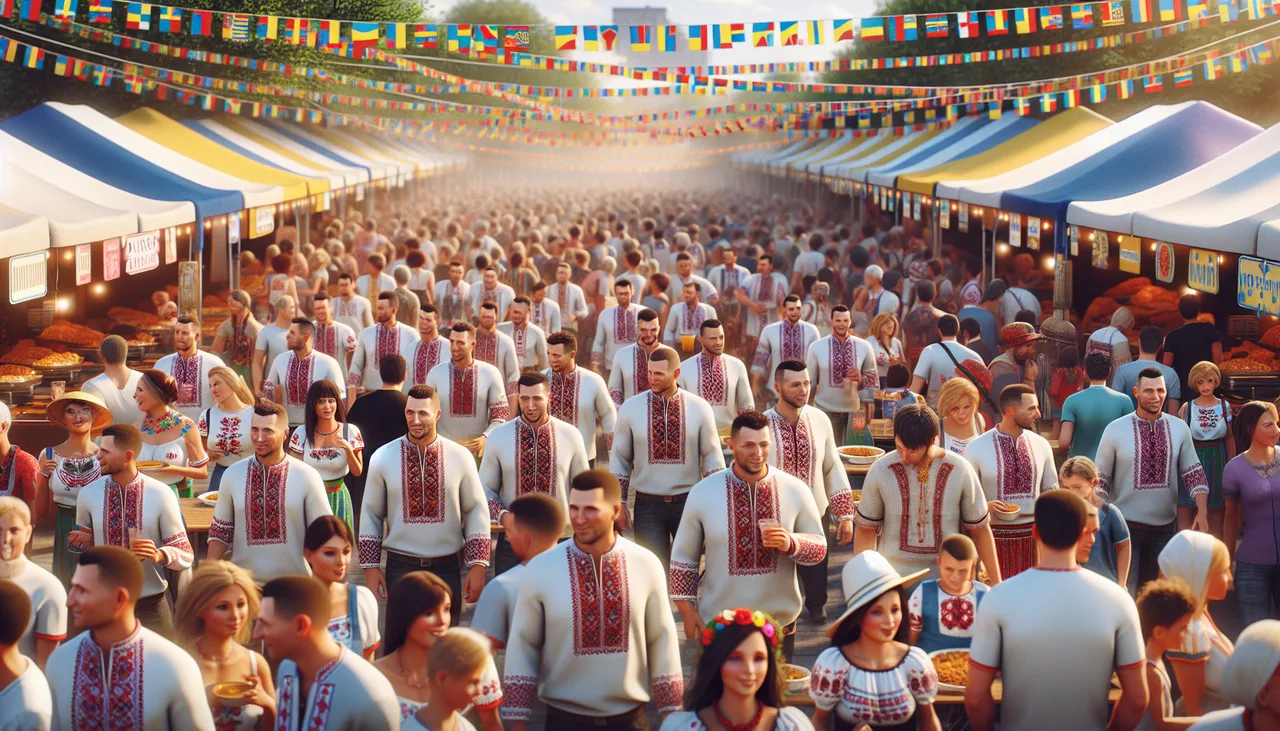
Canada is home to more than 1.3 million people of Ukrainian descent, making it one of the largest Ukrainian diaspora communities in the world. Since the first wave of immigration in the late nineteenth century, Ukrainian Canadians have moved from the margins of society to its very centre, achieving distinction in fields as diverse as federal politics, professional hockey, literary fiction, visual art, academic research and entrepreneurship. Their collective story is not simply one of ethnic success but a testament to the broader Canadian ideal that talent and determination, regardless of origin, can flourish in a society built on pluralism and opportunity.
What makes the Ukrainian-Canadian experience particularly remarkable is the speed of the community's ascent. Within two generations, the descendants of illiterate peasant farmers from Galicia and Bukovyna were sitting in Parliament, breaking scoring records in the National Hockey League and exhibiting paintings in national galleries. This article surveys the most notable Ukrainian Canadians across five major domains: politics, sports, arts and culture, science and business, and the enduring legacy they have created for future generations. For background on the community that produced these individuals, see our guide to the Ukrainian community across Canada.
Ukrainian Canadians in Politics
The political achievements of Ukrainian Canadians are among the most striking indicators of the community's integration and influence in Canadian public life. From municipal councils in prairie towns to the federal cabinet in Ottawa, Ukrainian Canadians have been elected and appointed to positions of power at every level of government. Their political engagement reflects not only individual ambition but also a deep community tradition of civic participation that stretches back to the earliest days of organized Ukrainian life in Canada. The Ukrainian Canadian Congress, founded in 1940, has served as the institutional backbone of this political engagement, coordinating advocacy efforts and mobilizing voters across the country for more than eight decades.
Chrystia Freeland
Chrystia Freeland stands as arguably the most prominent Ukrainian Canadian in the history of Canadian politics. Born in Peace River, Alberta in 1968, Freeland grew up in a Ukrainian-Canadian family with deep roots in the prairie community. Her maternal grandparents were Ukrainian immigrants, and she was raised with a strong awareness of her heritage, learning both Ukrainian and Russian alongside English. This linguistic and cultural background would prove instrumental in shaping her career as a journalist, author and ultimately one of the most powerful politicians in the country.
Freeland's political career reached its apex when she served simultaneously as Deputy Prime Minister and Minister of Finance from 2019 to 2024, making her the first woman to hold the finance portfolio in Canadian history. Before entering politics, she had distinguished herself as a journalist and author specializing in post-Soviet economics and global plutocracy, with her book Sale of the Century providing an influential account of Russia's transition from communism to capitalism. Her expertise in Eastern European affairs, combined with her fluency in Ukrainian and Russian, made her uniquely qualified to shape Canada's response to Russian aggression against Ukraine. Under her influence, Canada adopted some of the strongest sanctions regimes against Russia among Western nations and became one of the most vocal international supporters of Ukrainian sovereignty.
Freeland's Ukrainian heritage was not merely biographical detail but an active element of her political identity. She was personally sanctioned by the Russian government in 2014 in retaliation for Canada's stance on the annexation of Crimea, a distinction she wore as a badge of honour. Her career demonstrated that the values of democratic governance, resistance to authoritarianism and advocacy for human rights, values deeply embedded in the Ukrainian-Canadian community, had become central to Canadian foreign policy. Her resignation from cabinet in December 2024 over policy disagreements with the Prime Minister only underscored her willingness to stand on principle, a trait her supporters attributed in part to the moral clarity instilled by her Ukrainian upbringing.
Pioneers of Political Representation
Long before Chrystia Freeland reached the highest echelons of power, earlier generations of Ukrainian Canadians had blazed the trail of political representation against considerable odds. The story of Ukrainian-Canadian political achievement begins with Michael Starr, born Mykhailo Starchevsky in Copper Cliff, Ontario in 1910. The son of Ukrainian immigrants who worked in the nickel mines of northern Ontario, Starr rose through municipal politics in Oshawa before winning election to the House of Commons in 1952. His appointment as Minister of Labour by Prime Minister John Diefenbaker in 1957 marked a watershed moment: Starr became the first Ukrainian Canadian to serve in the federal cabinet, demonstrating to an entire community that the children of immigrants could reach the highest levels of Canadian governance. He served in cabinet until 1963 and remained a Member of Parliament until 1968, earning a reputation as a conscientious and hard-working representative.
Ray Hnatyshyn carried the torch of Ukrainian-Canadian political achievement even further when he was appointed the 24th Governor General of Canada in 1990, serving until 1995. Born in Saskatoon, Saskatchewan in 1934, Hnatyshyn was the son of Senator John Hnatyshyn, himself a notable figure in Ukrainian-Canadian political life. As Governor General, Hnatyshyn served as the representative of the Crown and the ceremonial head of the Canadian state, a position of enormous symbolic significance for a community that had once been interned as enemy aliens during World War I. His tenure was marked by warmth, accessibility and a genuine commitment to promoting Canadian unity, and he used the vice-regal platform to celebrate the country's multicultural heritage, including its Ukrainian dimension.
In provincial politics, Ed Stelmach made history in 2006 when he became Premier of Alberta, one of Canada's wealthiest and most politically influential provinces. A third-generation Ukrainian Canadian from a farming family near Vegreville, Stelmach's rise to the premiership illustrated how deeply integrated the Ukrainian community had become in the prairie political establishment. His tenure as premier from 2006 to 2011 coincided with Alberta's oil boom, and his governance style, pragmatic, moderate and community-oriented, reflected the values of the rural Ukrainian-Canadian milieu in which he was raised.
Other notable Ukrainian-Canadian politicians include Borys Wrzesnewskyj, the Liberal Member of Parliament for Etobicoke Centre who became one of the most vocal advocates for Ukrainian causes in the House of Commons, consistently pushing for Holodomor recognition and stronger Canada-Ukraine relations. James Bezan, the Conservative MP for Selkirk-Interlake-Eastman in Manitoba, has served continuously since 2004 and has been a persistent voice on defence and foreign affairs issues related to Ukraine. At the provincial level, Dave Broda, Gary Filmon and numerous other Ukrainian Canadians have served as MLAs, ministers and premiers across the prairie provinces, building a tradition of political service that spans generations. For a deeper exploration of the community's immigration history and how it laid the groundwork for political engagement, see our dedicated article.
Sports Legends
If politics represents one dimension of Ukrainian-Canadian achievement, professional sports represents another, and nowhere is the community's contribution more visible than in the sport that Canadians hold most dear: ice hockey. Ukrainian Canadians have produced an extraordinary number of elite hockey players, including several who are widely considered among the greatest ever to play the game. This is not coincidental. The prairie communities where Ukrainian immigrants settled were the same communities where hockey flourished as a winter pastime, and the work ethic, competitiveness and physical resilience cultivated by farming families translated naturally to the demands of elite sport.
Wayne Gretzky's Ukrainian Roots
Any discussion of Ukrainian Canadians in sports must begin with Wayne Gretzky, universally acknowledged as the greatest hockey player in the history of the game. Gretzky's connection to the Ukrainian-Canadian community runs through his paternal grandmother, who emigrated from Ukraine to Canada in the early twentieth century. While Gretzky is of mixed European descent, his Ukrainian heritage has been a source of acknowledged pride. Growing up in Brantford, Ontario, he was surrounded by the traditions and values of a family shaped in part by its Ukrainian roots.
Gretzky's achievements defy simple enumeration. Over a career spanning from 1979 to 1999, he set 61 official NHL records, many of which are considered unbreakable. He scored 894 goals and recorded 1,963 assists for a total of 2,857 points, a mark so far beyond any other player that even his assists alone would make him the all-time leading scorer. He won the Hart Trophy as the league's Most Valuable Player nine times, led the Edmonton Oilers to four Stanley Cup championships and earned the nickname "The Great One," a title that no subsequent player has come close to claiming. His number 99 was retired league-wide, an honour unique in the history of the NHL. Beyond the statistics, Gretzky transformed hockey from a predominantly Canadian sport into a global phenomenon, and his influence on the game's culture, tactics and commercial development remains unmatched.
Other Sports Stars
Terry Sawchuk, born Terrance Gordon Sawchuk in Winnipeg, Manitoba in 1929 to a Ukrainian-Canadian family, is widely regarded as one of the greatest goaltenders in NHL history. Over a career that spanned from 1949 to 1970, Sawchuk recorded 103 career shutouts, a record that stood for decades. He won the Vezina Trophy as the league's best goaltender four times and was instrumental in the Detroit Red Wings' Stanley Cup victories in the early 1950s. Sawchuk's career was marked by extraordinary physical courage; he played in an era before goaltenders wore face masks and accumulated hundreds of stitches from puck and stick injuries. His tragic death in 1970 at the age of 40 cut short a career that had already secured his place among the immortals of the sport. He was inducted into the Hockey Hall of Fame in 1971.
Mike Bossy, born in Montreal in 1957 to a family of Ukrainian descent, was one of the most prolific goal scorers in NHL history. Playing for the New York Islanders from 1977 to 1987, Bossy scored 573 goals in just 752 games, a goals-per-game ratio that remains among the highest ever recorded. He was a central figure in the Islanders' dynasty that won four consecutive Stanley Cup championships from 1980 to 1983, and he scored the Cup-winning goal in the 1982 finals. Bossy's career was cut short by chronic back injuries at the age of 30, but his impact on the game was immense.
Beyond hockey, Ukrainian Canadians have excelled in other sports as well. Hayley Wickenheiser, widely considered the greatest female hockey player of all time, has Ukrainian roots through her family's prairie heritage. She won four Olympic gold medals and one silver with the Canadian women's hockey team and was inducted into the Hockey Hall of Fame in 2019. Steve Ludzik, born in Toronto to a Ukrainian-Canadian family, played in the NHL and later coached professional hockey teams. In the world of Olympic sport, numerous athletes of Ukrainian descent have represented Canada in wrestling, weightlifting, figure skating and track and field, building on a tradition of athletic excellence that traces back to the physical culture of the early Ukrainian-Canadian farming communities.
Arts, Culture and Media
The contributions of Ukrainian Canadians to Canadian arts and culture are as diverse and significant as their achievements in politics and sport. From literature and visual art to dance and broadcast media, Ukrainian Canadians have enriched the country's cultural landscape while simultaneously preserving and reinterpreting their own heritage traditions. The community's cultural output reflects a distinctive dual consciousness: an engagement with the broader currents of Canadian artistic life combined with a deep connection to Ukrainian identity, history and aesthetics.
Writers and Artists
William Kurelek stands as one of the most important Canadian painters of the twentieth century and the most celebrated visual artist of Ukrainian-Canadian heritage. Born in 1927 near Whitford, Alberta to Ukrainian immigrant parents, Kurelek grew up on a dairy farm in Manitoba, an experience that profoundly shaped his artistic vision. After studying art in Ontario, Mexico and England, he returned to Canada and produced an extraordinary body of work that depicted the life, landscapes and spiritual dimensions of the Canadian prairies with vivid, almost hallucinatory clarity. His series The Ukrainian Pioneer is a landmark of Canadian art, a sequence of paintings that chronicles the settlement experience of Ukrainian immigrants with meticulous historical detail and deep emotional resonance. Kurelek's paintings hang in the National Gallery of Canada and in major museums across the country, and his illustrated books, including A Prairie Boy's Winter and A Prairie Boy's Summer, have become classics of Canadian children's literature. He was inducted as a member of the Order of Canada in 1974.
In literature, Janice Kulyk Keefer has emerged as one of the most accomplished novelists and scholars to explore the Ukrainian-Canadian experience. Her novel The Green Library and her non-fiction work Honey and Ashes: A Story of Family examine the complexities of Ukrainian identity in the diaspora, tracing family histories across continents and generations. Myrna Kostash, born in Edmonton in 1944, is a pioneering journalist and non-fiction author whose work has documented the social and political history of Ukrainian Canadians with rigour and passion. Her book All of Baba's Children, published in 1977, was one of the first major English-language accounts of the Ukrainian-Canadian experience and remains a foundational text in the field. Lisa Chicken and other emerging writers continue to explore themes of identity, displacement and belonging that resonate deeply within the Ukrainian-Canadian literary tradition.
Music and Performance
The Ukrainian Shumka Dancers, founded in Edmonton in 1959, are Canada's premier Ukrainian dance ensemble and one of the most acclaimed folk dance companies in the world. With a repertoire that blends traditional Ukrainian choreography with contemporary theatrical innovation, Shumka has performed on stages across Canada, the United States, Europe and Asia, bringing Ukrainian dance to international audiences. The company has been featured at Expo 86 in Vancouver, performed at the opening ceremonies of the XV International Congress of Slavists and has been recognized with numerous awards for artistic excellence. Shumka's success reflects the broader vitality of Ukrainian performing arts in Canada, where hundreds of smaller dance groups, choirs and theatre companies operate in communities from coast to coast.
Luba Goy, born Liubomyra Lewytska in Edmonton in 1945, became one of the most recognizable comedic performers in Canadian broadcasting history through her long-running role on Royal Canadian Air Farce, the CBC television comedy programme that ran from 1993 to 2008 after more than two decades on radio. Goy's impressions of Canadian political figures and her sharp comedic timing made her a household name, and she used her platform to bring visibility to Ukrainian-Canadian culture in mainstream Canadian media. Andrea Banica and other performers of Ukrainian descent have contributed to the diversity of Canadian music and entertainment, while community-based cultural events such as the annual Ukrainian festivals in Edmonton, Dauphin, Manitoba and Vegreville, Alberta continue to attract tens of thousands of visitors and serve as living showcases for Ukrainian artistic traditions.
Science, Business and Innovation
While politics, sports and the arts often capture the most public attention, the contributions of Ukrainian Canadians to science, academia, business and technological innovation have been equally significant, if sometimes less visible. The community's engagement with higher education and research began in earnest with the third wave of post-war immigration, which brought a disproportionately large number of educated professionals to Canada, and has accelerated with each subsequent generation.
Academic and Scientific Contributions
Ukrainian Canadians have played a foundational role in establishing and sustaining Ukrainian studies as an academic discipline in North America. The Canadian Institute of Ukrainian Studies (CIUS) at the University of Alberta, founded in 1976, is the world's leading centre for the academic study of Ukraine, Ukrainian Canadians and the broader Ukrainian diaspora. CIUS has produced landmark publications including the five-volume Encyclopedia of Ukraine, a project that required decades of scholarly collaboration and remains the definitive English-language reference work on Ukraine and its people. The Petro Jacyk Centre for Ukrainian Historical Research, also based at the University of Alberta, has supported groundbreaking scholarship on the Holodomor, Ukrainian political history and diaspora studies.
At the University of Toronto, the Centre for European, Russian, and Eurasian Studies includes significant programmes devoted to Ukrainian language, history and culture, building on a tradition of Ukrainian studies that dates back to the mid-twentieth century. The Shevchenko Scientific Society, with active branches in Canada, has facilitated scholarly exchange between Ukrainian-Canadian researchers and their counterparts in Ukraine and around the world. Beyond the humanities, Ukrainian-Canadian scientists have made notable contributions to fields including agricultural science, where the community's farming heritage has translated into academic expertise at institutions like the University of Saskatchewan, as well as engineering, medicine and computer science. Researchers of Ukrainian descent are active at major Canadian universities and in federal research laboratories, contributing to advances in everything from crop genetics to artificial intelligence.
Business Leaders
The business achievements of Ukrainian Canadians are deeply rooted in the community's tradition of cooperative enterprise. The Ukrainian credit union movement, which began in the early twentieth century as a means for immigrant families to pool resources and provide mutual financial support, has evolved into a network of substantial financial institutions serving both Ukrainian-Canadian and broader communities. Institutions such as Buduchnist Credit Union in Toronto, Carpathia Credit Union in Winnipeg and Ukrainian Credit Union in the prairies manage hundreds of millions of dollars in assets and provide essential banking services to their members. These credit unions are not merely financial institutions but community anchors, supporting Ukrainian schools, churches, cultural events and charitable initiatives.
In the broader business world, Ukrainian-Canadian entrepreneurs have built successful companies across sectors including real estate, construction, food services, technology and professional services. The community's reputation for hard work, reliability and strong family networks has supported the growth of businesses that range from small family operations to substantial enterprises. In the technology sector, a new generation of Ukrainian-Canadian founders and executives is making its mark, particularly in cities like Toronto, Waterloo and Vancouver where the tech ecosystem is thriving. Many of these entrepreneurs maintain connections to Ukraine's own burgeoning tech industry, creating business bridges between the two countries that benefit both economies. For context on how the broader Ukrainian community in Canada has built its institutional and economic foundations, see our comprehensive guide.
The Legacy of Ukrainian-Canadian Achievement
The achievements surveyed in this article are not merely individual stories of success but collective milestones that reflect the trajectory of an entire community. When Michael Starr entered the federal cabinet in 1957, he carried with him the aspirations of hundreds of thousands of Ukrainian Canadians who had worked the prairies, endured internment and built institutions from scratch. When Wayne Gretzky skated onto the ice at Northlands Coliseum in Edmonton, he drew on a well of determination and competitive spirit that had been cultivated in Ukrainian-Canadian families for generations. When William Kurelek painted the prairie landscape, he was preserving a visual memory of the community's origins for all Canadians to share.
The legacy of these famous Ukrainian Canadians extends in multiple directions. Within the community, they serve as powerful role models, demonstrating to young Ukrainian Canadians that their heritage is not a limitation but an asset, a source of resilience, creativity and moral purpose that can propel them to the highest levels of achievement in any field. For newcomers arriving from Ukraine under programmes like CUAET, the success of earlier generations provides both inspiration and practical proof that integration into Canadian society does not require abandoning one's identity. The stories of Freeland, Gretzky, Kurelek and others show that Ukrainian heritage and Canadian success are not merely compatible but mutually reinforcing.
For Canada as a whole, the achievements of Ukrainian Canadians are a validation of the multicultural model that defines the country's national identity. The fact that a community of immigrant farmers could produce, within a few generations, a Governor General, a Deputy Prime Minister, the greatest hockey player of all time and internationally recognized artists and scholars speaks to the openness and opportunity that Canada at its best has offered to newcomers. It also speaks to the qualities that Ukrainian immigrants brought with them: a work ethic forged by centuries of agricultural labour, a commitment to education and self-improvement, a deep attachment to family and community and an unshakeable belief in the value of freedom. These are the qualities that built the Ukrainian-Canadian community from its earliest days, and they continue to drive its members to achievement and service today.
As the Ukrainian-Canadian community enters its second century in Canada, with more than 1.3 million members and growing, its capacity to produce remarkable individuals shows no sign of diminishing. The newest wave of Ukrainian arrivals, fleeing the devastation of war, brings with it a fresh infusion of talent, energy and determination. If history is any guide, the next generation of famous Ukrainian Canadians is already among us, preparing to make its mark on the country and the world.
Frequently Asked Questions
Is Wayne Gretzky Ukrainian Canadian?
Wayne Gretzky has Ukrainian heritage through his paternal grandmother, who emigrated from Ukraine to Canada. While Gretzky is of mixed European descent, he has acknowledged his Ukrainian roots and the family's connection to the Ukrainian-Canadian community in Ontario.
Who was the first Ukrainian Canadian to serve in the federal cabinet?
Michael Starr (born Mykhailo Starchevsky) became the first Ukrainian Canadian to serve as a federal cabinet minister when Prime Minister John Diefenbaker appointed him Minister of Labour in 1957. Starr was born in Copper Cliff, Ontario in 1910 and served in cabinet until 1963.
What role did Chrystia Freeland's Ukrainian heritage play in Canadian politics?
Chrystia Freeland, born in Peace River, Alberta to a Ukrainian-Canadian family, served as Deputy Prime Minister and Minister of Finance. Her Ukrainian heritage shaped her expertise in Eastern European affairs, her fluency in Ukrainian and Russian, and her strong advocacy for sanctions against Russia and support for Ukrainian sovereignty on the world stage.